How to Introduce a Lemon Vibrator to Your Partner Without Making It Weird
Let's be real. The idea of bringing up vibrators with your partner feels bigger than it actually is. You're imagining rejection, misunderstanding, or some kind of accusation that what you have isn't enough. None of that is usually what happens.
What actually happens is usually simpler: you say something, your partner listens, and then you both move forward with information you didn't have before. That's it.
The awkwardness lives in your head before the conversation. Once you say it out loud, most of it evaporates.
Why partners actually want this conversation
Here's something that might shift how you think about bringing this up. Most people with partners want their partner to feel good. Full stop. That desire is stronger than any insecurity about toys.
When you frame introducing a lemon clitoral vibrator as "I want to feel better and I want to share that with you," you're not criticizing the sex you're having. You're expanding it. You're saying yes to more sensation, more pleasure, more of the two of you together.
That's genuinely attractive to most people. It signals confidence, honesty, and that you care enough about your shared experience to speak up.
The setup matters more than the words
Timing is everything. Don't bring this up during sex, right before sex, or when you're fighting about something else. Those moments carry too much baggage.
Instead, pick a moment when you're both relaxed and talking naturally. On the couch. In the car on a long drive. Literally anywhere the conversation feels low-stakes because the rest of your day isn't hanging on it.
Your tone matters too. You're not confessing. You're not asking permission. You're sharing an idea and opening a door.
Opening lines that actually work
Honestly though, you don't need fancy words. Here are real openings that work:
"I've been thinking about ways we could make sex feel even better for me. I was looking into clitoral vibrators, and I think I'd like to try one. Would you be into exploring that together?"
"I read something about lemon vibrators and they sound kind of amazing. Want to look at them with me?"
"I think I want to try a vibrator. I'm not saying anything's missing. I just want to feel what that's like, and I'd love to do it with you."
They all work because they're direct, they're not defensive, and they invite your partner into the decision rather than announcing you've already made it.
What to expect as a response
You'll probably get one of three reactions.
The first is enthusiasm. Your partner says yes immediately, maybe asks questions, maybe wants to shop together. This is the most common response. Most people are genuinely curious and excited about something new in their intimate life.
The second is hesitation. Your partner needs time to think about it, or they want more information, or they're not sure how they feel. This is fine. Respect that, answer questions honestly, and let them sit with it. You can come back to the conversation in a few days.
The third is something that sounds like rejection but usually isn't. "Are you not satisfied?" or "Do I not please you?" This one stings because it sounds personal, but it's usually just fear talking. Your partner is worried they're not enough. That's the moment to be clear: "This isn't about you. I love what we have. I just want to add something. And I want to do it with you."
Why shopping together changes everything
If your partner agrees, the next step is looking at lemon vibrators together. And I mean actually together, not you sending them a link and hoping they click it.
Open your phone or laptop. Sit next to each other. Look at what's available. Talk about what appeals to you. Ask what they think. Let them ask questions.
This transforms the toy from "your thing" to "our thing." It also gives your partner a sense of agency and control, which is psychologically important when you're bringing something new into intimacy.
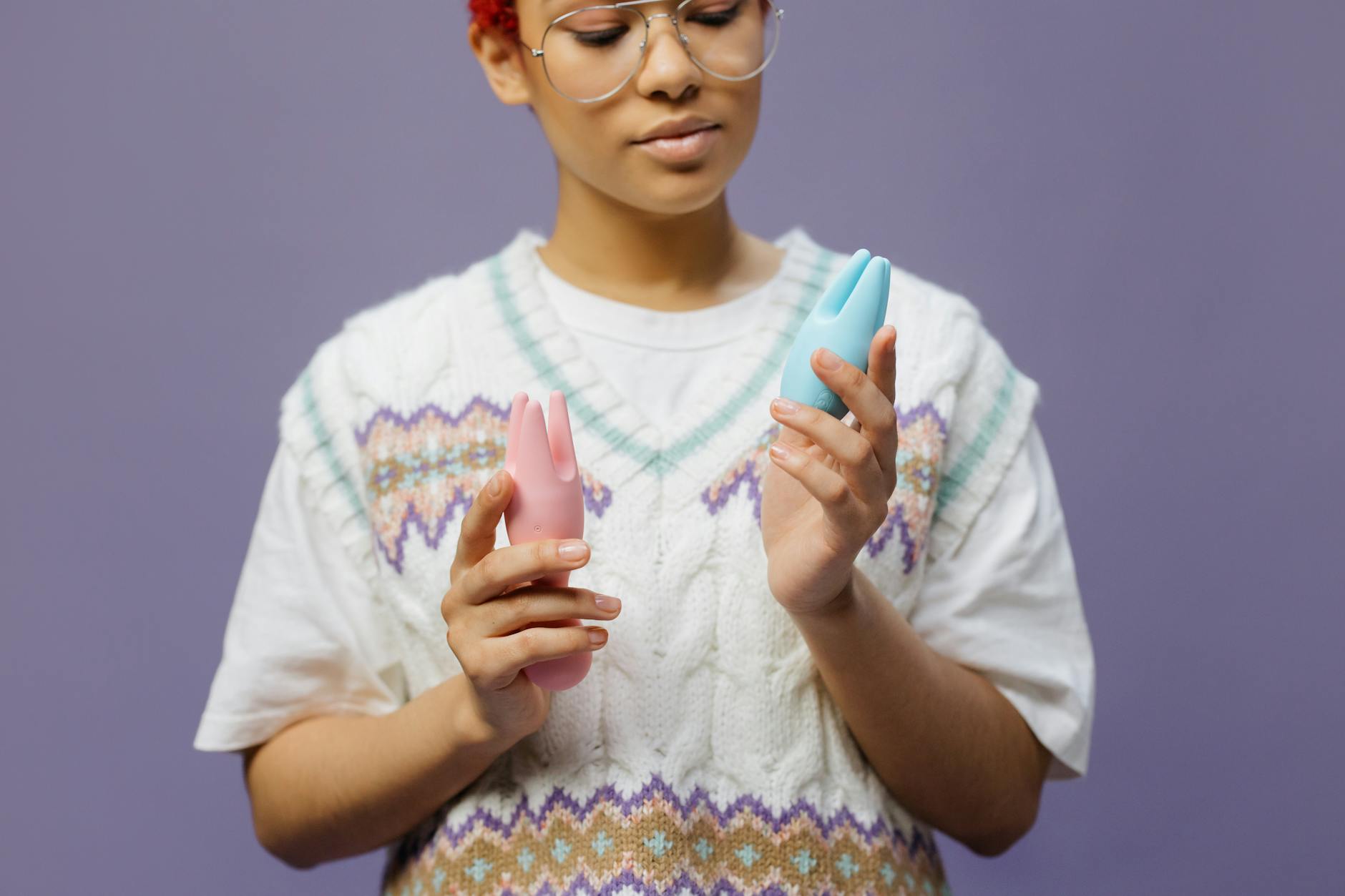
Hello Nancy has a few good options. The Lemon clitoral vibrator is the flagship. It's highly rated, not intimidating if you're new to toys, and it works well for most people. Looking at it together is a conversation starter in itself.
The difference between solo and partnered exploration
Once you have the toy, you get to decide how to use it. You might use it alone first to get comfortable with it. That's smart. You understand what it does, what feels good, how to use it without pressure.
Or you might use it with your partner present from the start. That's also fine. Some couples find that instant inclusion makes it feel less separate, less like a solo thing you're doing in secret.
Neither path is wrong. What matters is that you both know which path you're taking.
How to actually use it together
When you're ready to bring it into partnered sex, start simple. You could use it during foreplay. You could use it during penetration. You could use it as the main event.
The clitoral vibrator works best when there's no pressure to perform or produce a specific outcome. You're exploring. You're learning what the sensation adds. You're seeing how your body responds.
Your partner can hold it, you can hold it, you can experiment with different positions. There's no script here. You're writing it together.
Common worries, debunked
"Will they think I'm not into them anymore?" No. The toy is not a replacement. It's an addition. It's like saying you want to try a new restaurant together. You're not rejecting every meal you've eaten.
"What if they're uncomfortable with it?" Then you talk about it. You ask what's making them uncomfortable. Sometimes it's just unfamiliarity. Sometimes it's something deeper that needs conversation. Either way, you can't fix it if you don't know what it is.
"What if I don't like it after all?" That's fine too. You tried something. It didn't work for you. You put it in a drawer and you move on. Your partner will respect that you were willing to explore.
The after-conversation part
Once you've introduced the idea and your partner's responded, the pressure's off. You don't need to use the toy tomorrow. You don't need to perform gratitude or excitement. You just let it exist as an option.
Sometimes the best part of introducing something new isn't the first time you use it. It's the fact that you can talk about it without shame. It's knowing your partner has your pleasure in mind. It's the small shift in how you think about your intimate life together.
That part tends to be more valuable than the toy itself.
When communication does the heavy lifting
Here's what I've learned in my practice: most relationship issues aren't really about the thing on the surface. They're about whether people feel safe being honest.
When you bring up lemon vibrators for partners or any other topic that feels risky, you're actually building that safety. You're saying, "I trust you with something vulnerable. I trust you with something I want."
That's relationship infrastructure. That's what makes everything else feel possible.
The vibrator is just the excuse.
The conversation after the conversation
If your partner's on board and you're using the toy together, you'll probably find new questions come up. What about other sensations? What about toys that work differently? What about exploring how lemon clitoral vibrators work differently on sensitive skin?
Each question is just another thread in the same conversation you already started. And each one gets easier to have because you've proven to each other that honesty here is safe.
Frequently asked questions
Should I ask permission before buying a vibrator for my partner?
Not exactly. You can buy one for yourself and then invite them to explore it with you. Or you can ask them to shop together and buy it as a shared purchase. What matters is that you're not surprising them with a toy and assuming they'll want to use it immediately. The choice to engage should be theirs.
What if my partner wants to pick the toy and I don't like their choice?
This is a real scenario. Be honest about it. "I appreciate you being into this, and I love that you want to explore it with me. That one doesn't feel like me, but what about this one instead?" You're a team here. The toy should feel good to the person using it.
Can I introduce a lemon vibrator if we're having relationship problems?
Not really. If you're fighting or distant or not communicating well, a new toy won't fix that. It might actually make things worse because there's no trust foundation. Work on the relationship first. Once you've rebuilt some safety and openness, then toys make sense.
How do I know if my partner is into it or just doing it to make me happy?
You ask. "Are you actually enjoying this or are you doing it for me?" That's a real question with a real answer. And yes, sometimes partners do things primarily to make their partner happy. That's normal in relationships. But you want to know if the experience itself is bringing them pleasure too. If it's not, keep exploring until you find something that does.
Is it weird if my partner wants to use the vibrator and I don't?
Not weird at all. Pleasure looks different for different people. Maybe your partner loves the sensation and you prefer other kinds of stimulation. That's actually useful information. You've learned something about each other. You work with it instead of against it.
What if introducing toys makes us feel disconnected during sex?
That usually means the toy brought something to the surface that was already there. Maybe one of you feels rushed. Maybe intimacy without "performance" feels uncomfortable. These are conversations worth having with each other, and possibly with a therapist. The toy didn't create the disconnect. It just revealed it.
Introducing a lemon vibrator to your partner is fundamentally a conversation about trust. It's you saying, "I want more pleasure and I want to experience that with you." Most people respond to that with openness.
The awkwardness is real for about thirty seconds. Then it usually dissolves, and you're just two people talking about something that matters to both of you.
If you need help with the bigger conversation about intimacy in your relationship, reach out to Hello Nancy. We're here for the questions that feel hard.