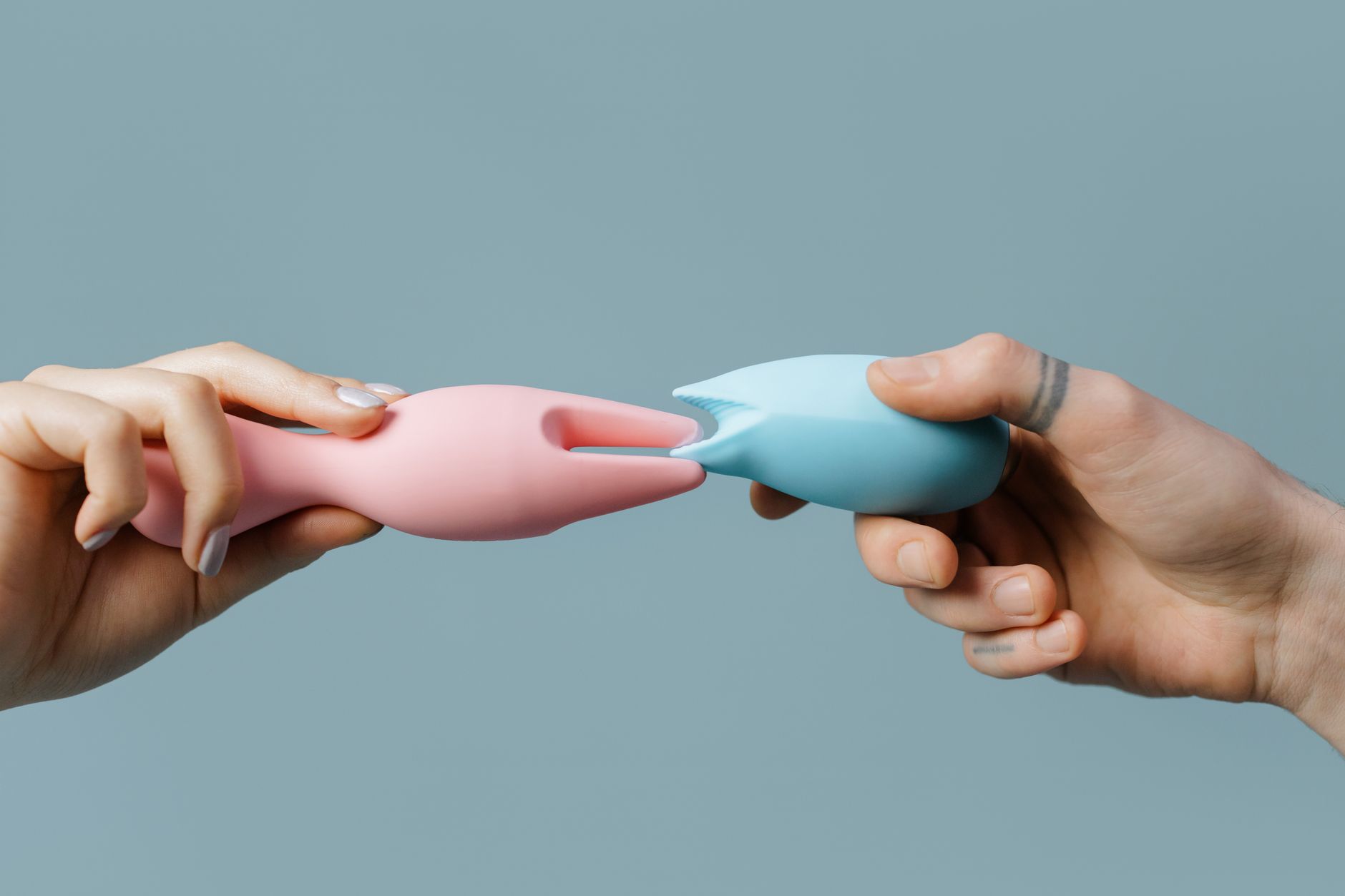
Your first vibrator doesn't have to be complicated
Let's be real. If you're thinking about trying a lemon vibrator for the first time, you're probably nervous. You might be wondering if it'll feel weird, if you're "doing it wrong," or if something's broken inside you if you need a toy at all. None of those things are true, and honestly, the anxiety you feel right now is more common than you'd think.
The good news: lemon clitoral vibrators are genuinely beginner-friendly. They're designed for exactly this moment. You're not broken, you're not weird, and you don't need to overthink it.
What actually happens when you use a vibrator for the first time
Your clitoris has 8,000 nerve endings. When you first use a vibrator, you're introducing a new kind of stimulus to those nerves. It doesn't hurt, it doesn't damage anything, and it doesn't make you "dependent" on vibrators for pleasure. What it does is give your body information: this is another way to feel good.
Most first-time vibrator users report one of three things in the first few minutes. One, it feels surprising. Two, it feels nice. Three, it feels like nothing at first, which is completely normal. Your body isn't being "broken" by stimulation. You're just getting used to a new sensation.
Here's the thing that nobody talks about: if nothing happens the first time, that's not a sign you should try harder. It's a sign you should try differently. Change the angle, try a different pattern, take a break for a day or two. Your nervous system isn't a light switch.
Why lemon vibrators are smart for beginners
The design of a lemon clitoral vibrator matters more than you'd think. Here's why the shape works:
The suction design is forgiving. Instead of direct friction, you're getting gentle suction that stimulates nerves without requiring perfect positioning. This means you can't really "do it wrong." You can't press too hard or miss the spot because the suction covers the area and adjusts to your body.
The patterns are varied but not overwhelming. A lemon vibrator typically has 5-10 patterns. You don't need to use all of them. Start with pattern 1 or 2. They're subtle. Once you feel comfortable, you can explore higher settings, but there's zero pressure to do that.
The size is approachable. It fits in your hand, it's not intimidating to look at, and it doesn't require any prep or insertion. You're in complete control from second one.
The setup that actually matters
Three things before you start: time, space, and lubrication.
Time first. Don't use your vibrator for the first time when you're rushed, tired, or thinking about your to-do list. Give yourself 20 minutes minimum with zero distractions. Put your phone on silent. Close the door. This isn't indulgence. This is data gathering.
Space second. You need somewhere comfortable where you won't be interrupted. This could be your bed, a comfortable chair, the bathroom, wherever you feel most at ease. Temperature matters too. Most people are less tense and more able to feel pleasure when they're warm.
Lubrication third. Water-based lubricant isn't strictly necessary with a suction vibrator, but it helps. It makes the seal better, it feels smoother against your skin, and it removes any friction worry. Use a small amount. You're not trying to drown yourself.
How to actually start (without overthinking it)
Once you're set up, here's the step-by-step:
One. Get yourself aroused first. This isn't a rule, but it helps. Read something that turns you on, think about something that feels good, let your mind wander. Spend five to ten minutes on this. You want your clitoris to be a little swollen and sensitive when the vibrator touches it.
Two. Apply a small amount of lubricant to the top of the vibrator, not your body.
Three. Turn it on at the lowest setting. This matters. Start low. You can always increase. You can't take sensation away if you start too strong.
Four. Place the vibrator on your clitoris and let it sit there for a few seconds. Don't rub it. Don't move it around. Just let the suction do the work.
Five. If that feels good, keep it there. If it doesn't feel like anything, try a slightly different angle. Move the vibrator a millimeter in any direction. Sometimes that's all it takes.
Six. If it still feels like nothing, turn it up one pattern level. Wait a few seconds. Notice what you're noticing.
If you feel pleasure building, fantastic. Let it build. You're not in a hurry. If you feel nothing after five minutes, that's fine too. Turn it off, take a break, try again another time. Your body isn't broken.
What you might feel (and what's totally normal)
Sensation varies wildly depending on your body, your stress level, your hormones, and a hundred other factors. Here's what "normal" actually includes:
A humming or buzzing feeling that spreads. A tingling sensation that builds slowly. A concentrated pressure that feels almost like a hand pressing on you. Numbness at first that turns to pleasure after a few minutes. Complete lack of sensation the first time, plus amazing sensation the second. Intense pleasure right away that makes you surprised. Pleasure that builds and plateaus instead of peaking. Pleasure that comes in waves. Pleasure mixed with a little bit of anxiety.
All of this is normal.
Here's what's not normal and means you should stop: pain, sharp sensations, burning, or anything that makes you tense up rather than relax. If your vibrator causes pain, it's not the right tool right now. That's not a judgment. That's information.
The mistakes that nobody warns you about
Starting too high. You'll feel less pleasure, not more. Start at setting 1. I'm not being precious about this. Your nervous system responds better to gradual increase.
Using it when you're rushed. Your body can't relax when you're watching the clock. Orgasm isn't the goal here. Pleasure is. Sometimes those are the same thing. Sometimes they're not.
Using it when you're stressed or tired. Your libido lives in your nervous system, and your nervous system responds to stress like a smoke detector responds to burnt toast. If you're anxious or exhausted, your body won't cooperate. That doesn't mean it won't ever. It means try again when you're calmer.
Expecting it to feel the same every time. You're human, not a machine. Some days your clitoris is more sensitive. Some days you're thinking about something that's distracting. Some days your hormones are different. This is normal variation, not equipment failure.
Comparing your experience to what you've read. You read someone's account of their first vibrator and had an orgasm in 30 seconds. You're using the same vibrator and feeling nothing. This is not a mystery. Bodies are different. Nervous systems are different. Your timeline is your timeline.
When to use it, and when to just... not
Lemon clitoral vibrators work best when you're:
Rested. Even a little bit. If you're running on three hours of sleep, your nervous system isn't going to cooperate.
Calm. Not necessarily happy, just not in fight-or-flight mode. If you just had a stressful conversation with your partner, your body might not be ready.
Lonely or exploring. Some people use vibrators solo. Some use them with a partner. The first time, solo is usually less pressure.
Curious rather than desperate. If you're using it because you feel like you should be having more pleasure, that pressure usually backfires. Use it because you're genuinely curious what it feels like.
How to talk about this if you're not alone
If you have a partner and you're introducing a vibrator to partnered sex, that's a separate conversation. Here's the short version: tell them before you use it. Not in a way that signals you're unsatisfied. In a way that signals you're curious. "I want to try this toy and see what it feels like. You don't have to do anything. I just want to explore." That's it. Their reaction tells you a lot. If they're supportive, fantastic. If they're threatened, that's a different problem that a vibrator won't solve.
If you want to use it together, start the same way you'd start alone: low setting, no pressure, no expectations. Let your partner watch if they want. Let them leave if they want. The first time is about your body learning, not about performance.
The first week matters, but it's not the only week
Your first vibrator experience is gathering data. You're learning what your body likes, what settings feel good, what time of day works best, whether you prefer being alone or with someone. This is information. You don't need to have an incredible orgasm in week one to know the vibrator was worth it.
Many people report that their most enjoyable experiences come in weeks two and three, once the novelty wears off and they're not thinking "is this working?" so much as just letting it work.
Give yourself permission to be a beginner. Your body's learning something new. That takes time.
FAQ: Beginner vibrator questions
Is it bad to use a vibrator as your first sexual experience?
No. Vibrators teach your body what feels good, and that information is valuable whether you're with a partner or alone. Some people's first sexual experience involves a toy. That's not less real or less valid than any other introduction to pleasure.
Can I become dependent on my vibrator?
Dependence isn't how pleasure works. Your body isn't a muscle that gets weak from using a vibrator. What can happen is that you become familiar with a specific sensation, so other sensations feel different by comparison. That's not damage. That's learning. If you want sensation variety, you change patterns or take breaks. You're in control.
How long until I feel something?
For some people, immediately. For others, never with that particular vibrator. If you're using a lemon clitoral vibrator and feel nothing after five to ten minutes, the vibrator isn't wrong and you're not broken. It might just be the wrong toy for your body, or the wrong moment, or both. That's information. You try again another time or you try a different toy.
Is it weird if I feel nothing the first time?
Nope. It's incredibly common. Your nervous system needs information to process what's happening. Sometimes that takes a few minutes. Sometimes it takes a few sessions. The fact that you felt nothing doesn't mean you won't feel something next time. It usually just means you were overthinking it.
Should I tell my partner I'm using a vibrator?
If you live with them or share intimate time with them regularly, honesty usually leads somewhere better than secrecy. You don't owe them a dramatic conversation. You can just mention it casually. "I picked up a vibrator and I'm trying it out." Their reaction tells you a lot about how they see your pleasure. That's useful information.
Do I need lubricant with a lemon vibrator?
You don't strictly need it, but it usually helps. Lubrication makes the seal between the vibrator and your skin better, which means more effective suction and less friction. A small amount of water-based lubricant is plenty. Silicone-based lube can damage the toy, so stick with water-based.
Where to go from here
Your first vibrator experience is just that. First. You'll learn what you like, what you don't, and what you're curious about. If a lemon clitoral vibrator feels right, that's fantastic. If you want to explore other clitoral vibrators later, that's fantastic too.
The point is permission. Permission to be curious. Permission to explore. Permission to take your time. Permission to have pleasure that's just for you, on your terms, at your pace.
If you have questions once you've started, you can always reach out. We're here for that.
Your first vibrator doesn't have to be perfect. It just has to be something you're genuinely curious about. Everything else follows from there.