
Here's what nobody tells you about sensitive clitoral tissue
Sensitive doesn't mean broken. It means your nerve endings are doing their job a little too well, registering every vibration, every pressure shift, every tiny change in intensity. Most lemon vibrators on the market are built for people who need strong, sustained stimulation. If that's not you, a standard vibrator becomes a problem instead of a solution.
The good news: choosing the right lemon vibrator when you have sensitive tissue is entirely doable. You just need to know what to look for.
Why sensitivity happens (and why it matters)
Clitoral sensitivity can show up for a bunch of reasons. Hormonal fluctuations, skin conditions, medications like SSRIs, or simply the natural variation in how your nervous system is wired all play a role. Some people are born this way. Others develop sensitivity after years of using toys that were too intense. Some experience it only during certain points in their cycle, others experience it across partners or situations.
The reason it matters for toy selection is simple: a vibrator that feels incredible for someone with lower sensitivity can feel painful or overwhelming for someone with high sensitivity. It's not about the vibrator being "bad." It's about the match between the toy and your tissue.
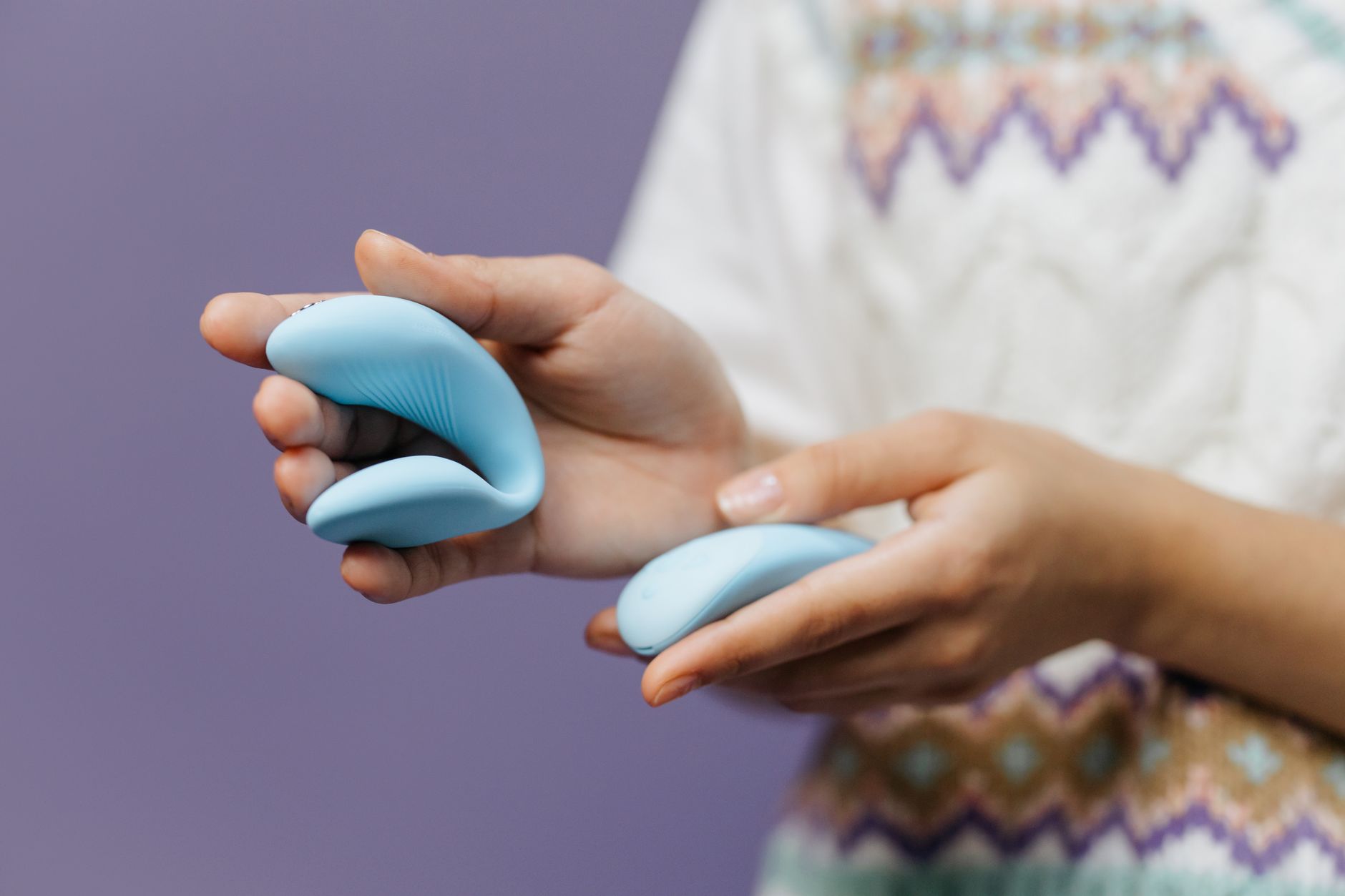
Photo by cottonbro studio on Pexels
The three vibration styles: which ones work for sensitive tissue
Rumbly vibrations feel like low, rolling waves. They penetrate deeper into tissue rather than buzzing the surface. For sensitive clitoral tissue, rumbly vibrations are almost always better than high-frequency buzzing. They're gentler, more diffuse, and less likely to trigger overstimulation. A lemon clitoral vibrator with rumbly oscillation feels like a massage that spreads pleasure across the whole area instead of drilling into one point.
Buzzy vibrations are high-frequency, surface-level. They concentrate intensity on whatever part of your clitoris is touching the device. If you have sensitive tissue, buzzy vibrations often feel sharp or even painful. Many people with sensitivity have reported that switching from a buzzy toy to a rumbly one completely changed their experience. You go from "I can't use this for more than 30 seconds" to "I could do this all day."
Pulsing patterns mimic a rhythm rather than constant vibration. For some people with sensitivity, patterns are more tolerable than continuous stimulation because the breaks between pulses let tissue calm down. For others, the unpredictability makes it worse. You won't know until you try.
Pattern and intensity: the two controls that matter most
When you're evaluating a lemon vibrator, intensity and pattern are what actually change the experience. A toy might have 10 intensity levels, but if it's fundamentally buzzy, cranking it down to level 2 still leaves you with buzzy stimulation. It's just less intense buzzy.
Helo Nancy Lemons designs the Lem with sensitive tissue in mind. It uses suction and rumbly oscillation rather than direct vibration. Suction pulls tissue gently upward and inward, creating stimulation without sharp pressure. The rumbly motor means you get broad, diffuse sensation instead of concentrated buzzing. If you have sensitive clitoral tissue, this architecture matters more than having 20 intensity levels.
When you're shopping, ask yourself: does this toy vibrate the clitoris, or does it stimulate through texture and pressure? Toys that work through suction, air-pulse, or broad oscillation tend to be better for sensitive tissue than toys that rely on pure vibration.
Material and texture: softer isn't always better
You'd think soft silicone would be easier on sensitive tissue than firm silicone. Sometimes yes, sometimes no. Soft silicone flexes more, which can actually create more micro-movements against your tissue. Firmer silicone stays stable, distributing pressure more evenly.
For sensitive tissue, what matters more than softness is how the surface distributes pressure. A slightly firmer material with a smooth surface often feels better than a super-soft material with texture that stimulates unevenly. The goal is broad, consistent contact with your clitoris, not pinpoint pressure from small surface irregularities.
Also, consider the contact area. A wider head spreads vibration across more tissue. A narrow head concentrates it. If you have sensitivity, wider contact is usually your friend.
Start low, go slower, use more lube
This sounds obvious, but the way you use the toy matters as much as which toy you pick. With sensitive tissue, your protocol changes.
Start at the lowest intensity level. Seriously. Not "I think I can handle level 3." Level 1. Spend 10 minutes there. Let your tissue acclimate. Many people with sensitive clitorises find that patience at the beginning makes the difference between pain and pleasure.
Go slower with warm-up time. Give yourself 15 to 20 minutes of gentle stimulation before building intensity. Your arousal is what makes sensitive tissue more receptive. You can't skip that step and then blame the toy for feeling sharp.
Use more lubricant than you think you need. Water-based lube creates a gentle barrier between the toy and your tissue. It also lets the toy move more smoothly, which means less friction and less irritation. Apply it generously before you start and reapply halfway through.
Consider indirect stimulation too. You don't have to apply the toy directly to your clitoris. Try applying it to the hood, the sides, or even the upper pubic mound. Different positions change how sensation distributes.
When to see someone (and what they can actually help with)
If sensitivity is new and came on suddenly, or if it's paired with pain during sex or itching or discharge, get checked by a gynecologist. There are treatable conditions like contact dermatitis or thrush that feel like "sensitivity" but are actually something else entirely.
If sensitivity is longstanding but you've never been evaluated, it's worth a conversation with a healthcare provider who specializes in sexual health. They can rule out medical causes and sometimes recommend topical treatments that make a real difference.
Also consider this: sometimes what feels like clitoral sensitivity is actually touch aversion, anxiety, or dissociation. A therapist who works with sexual health can help you figure out if the issue is tissue-level or nervous-system-level. The treatment is different depending on the cause.
Testing the waters: how to know if a lemon vibrator will work for you
Before dropping $80 plus on a toy, here's how to assess whether a specific vibrator might work for sensitive tissue:
Read reviews from people with sensitivity. Not everyone mentions it, but scan the comments for phrases like "too intense" or "overwhelming" or "good for sensitive." Pay attention to the ratio of positive and negative feedback in that category.
Check the motor type. Suction and air-pulse toys are safer bets than pure vibration toys. Rumbly motors beat buzzy ones.
Look at the intensity range. Does it start really low? Can you actually feel a difference between level 1 and level 2, or do the low levels feel broken? More granular control is better for sensitive tissue.
Check the return policy. Buy from brands that let you try the toy and return it if it doesn't work. Helo Nancy Lemons has a 30-day return policy, which gives you real time to test whether a lemon vibrator actually works for your body.
Consider whether the toy is designed with any feedback mechanism. Some toys have removable heads or adjustable caps that let you customize intensity and texture. That flexibility is gold for sensitive tissue.
The real thing to remember
Your clitoral sensitivity is not a bug. It's information. If you've been using toys that don't work for your tissue and blaming yourself for being "too sensitive," stop. The toy was wrong, not you. There are lemon vibrators designed with sensitivity in mind. A rumbly, low-pressure suction toy that lets you start at genuinely low intensity and build from there will likely feel completely different from whatever high-buzz toy you tried before.
Talk to partners about what you need. Ask for more time, more lube, lighter touch during warm-up. Your sensitivity might actually make you more responsive than people with lower sensitivity, once you have the right conditions and the right toy.
Choosing a lemon vibrator when you have sensitive clitoral tissue means rejecting the assumption that you need to "toughen up" your tissue or push through discomfort. You don't. You need to match the tool to your nervous system. Once you do, pleasure usually follows.
People also ask
Can you use a regular vibrator on sensitive clitoral tissue?
Yes, but it depends on the vibrator. A buzzy, high-intensity toy will probably feel painful. A rumbly suction toy or a toy designed for low-pressure stimulation can work great. The type of vibration matters more than the category of toy. Many people with sensitive tissue have success with clitoral vibrators once they find one that matches their tissue's needs.
What's the best vibrator for sensitive clitoris?
There's no universal "best," but toys that check these boxes tend to work well for sensitive tissue: rumbly motors (not buzzy), broad contact area, multiple low intensity levels, and designs that use suction or air-pulse rather than direct vibration. Read reviews from people specifically mentioning sensitivity. Watch return policies in case the toy doesn't work for you personally.
How do you know if your clitoris is too sensitive?
You'll feel sharp sensation, discomfort, or pain when using standard vibrators. You might have overstimulation that lasts longer than you'd expect. You might need indirect stimulation (through clothing, the hood, or surrounding tissue) instead of direct touch. You might find that gentle hand stimulation feels better than any toy. These are all signs your clitoral tissue is sensitive. That said, sensitive tissue can also become less reactive over time with the right approach and the right toy.
Does sensitivity go away with practice?
Sometimes. If sensitivity came on because you were using toys that were too intense, switching to a gentler approach and a better-designed toy often helps tissue calm down. If sensitivity is neurological or hormonally driven, it might persist but become more manageable with the right stimulation style. If it's anxiety-related, therapy plus a lower-pressure toy helps. The point is: patience and the right conditions matter more than pushing through.
Can you use a lemon vibrator internally if you have sensitive tissue?
Lemon vibrators are designed for clitoral stimulation, not internal use. If you have sensitive internal tissue too, you'd want a toy specifically designed for that with a softer, smaller head. Many people with sensitive clitorises don't have sensitive vaginal tissue, or vice versa. Don't assume sensitivity in one area means sensitivity everywhere. Explore gently and see what your body actually needs.
What should you avoid when you have sensitive clitoral tissue?
Avoid high-buzz vibrators, toys with sharp texture or uneven surfaces, toys that concentrate pressure on a tiny area, starting at high intensity, skipping warm-up time, using toys dry without lube, and partners who dismiss your sensitivity as something to "get over." Also avoid comparing your sensitivity to someone else's nervous system. Your tissue is yours. Honor it.