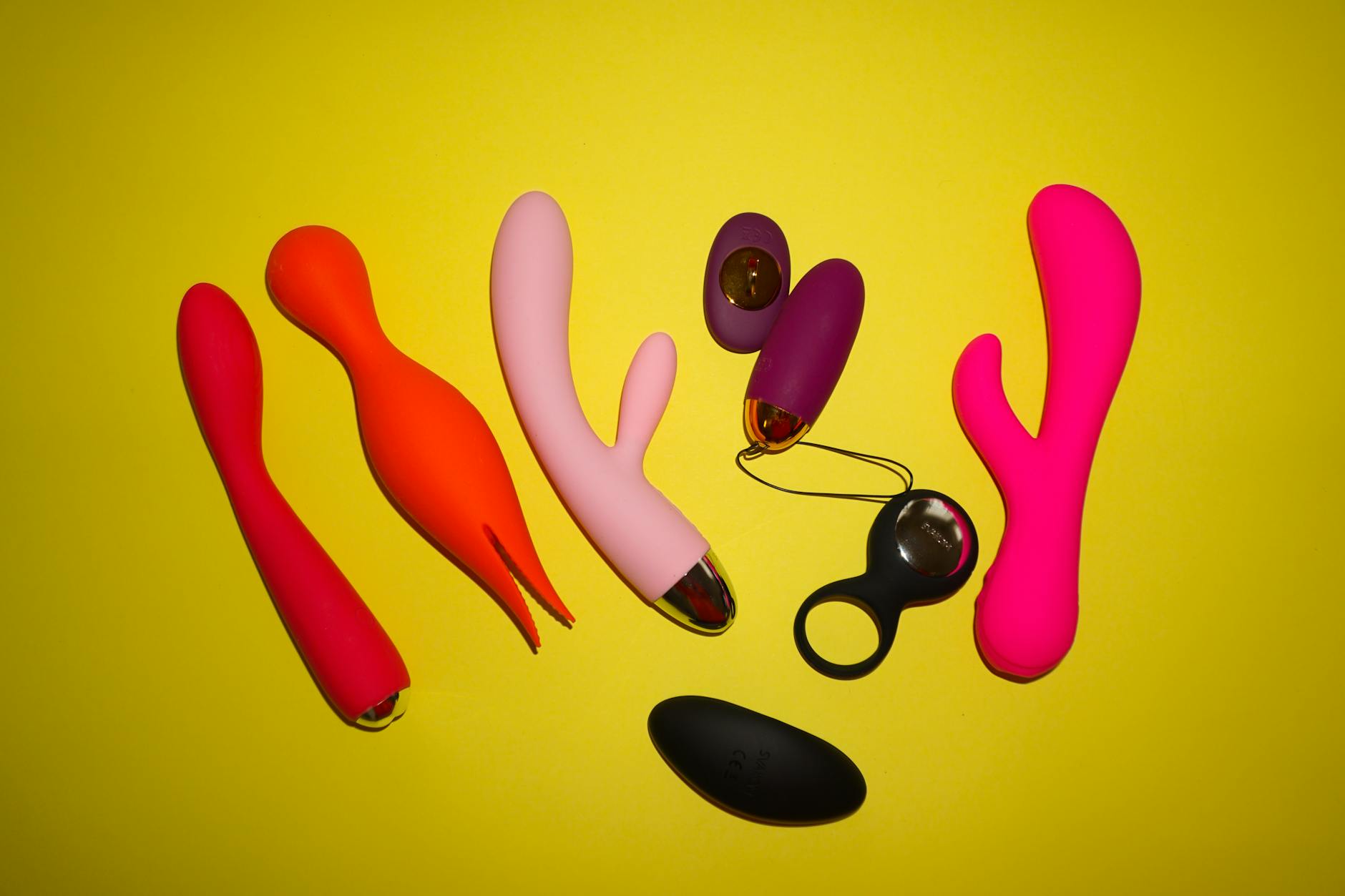
Here's the thing about pleasure and your brain
Your body knows how to feel good. Your mind, though. Your mind is a separate project entirely. It's narrating, planning, worrying, checking the time, replaying an email exchange from this morning. Meanwhile your clitoris is waiting for you to show up.
This disconnect is wildly common. It's not a disorder. It's not broken. It's just how attention works when you're caught between your nervous system and your thoughts.
The good news: a lemon clitoral vibrator works because it bypasses that narration. It doesn't heal your mind or teach your thoughts to shut up. It just creates enough physical sensation that your brain has to pay attention to your body instead.
Why external sensation is a shortcut to presence
When pleasure feels mental instead of physical, it's usually because your attention is anchored somewhere outside your body. Your partner's reaction. The pressure to orgasm. A to-do list. The thought "am I doing this right."
Clitoral vibrators, especially sustained ones like the Lem, work through something therapists call "sensate focus." You're not trying to reach an outcome. You're paying attention to what you actually feel right now. The vibration is consistent enough that you can't ignore it. It's asking for your full attention.
This is different from partnered touch. A partner's hand requires your brain to track their rhythm, adjust to variations, and sometimes manage their experience too. Your lemon clitoral vibrator doesn't have feelings. It doesn't wonder if you're excited. It just vibrates. That simplicity is the whole point.
How the Lem specifically bridges mind and body
The Lem's suction-and-vibration pattern works differently than a standard vibrator. Instead of relying on you to manage pressure and positioning, it creates rhythmic feedback that your nervous system recognizes immediately. You feel the pattern. Your brain quiets down to register it. That's the disconnect breaking.
The rhythm also matters for attention. Random or variable stimulation keeps your brain searching for the next sensation. Consistent rhythm lets your brain relax into it. That's why people with racing thoughts often find structured stimulation more grounding than spontaneous touch.
Many people report that their mind settles fastest when they start at a lower intensity and stay there for several minutes. You're not chasing anything. You're just letting the vibration become your focus. After five or ten minutes of that, the narration usually stops on its own.
The nervous system angle
When your mind is spinning, your nervous system is often in a state therapists call sympathetic activation. You're ready to problem-solve. You're alert. You're not relaxed. Regular touch from a partner can actually reinforce that alertness because it requires active participation.
External vibration is different. It's passive input. Your body receives the stimulus without having to do anything to maintain it. That can shift your nervous system into parasympathetic mode, which is where actual pleasure happens. You're not achieving relaxation. You're just dropping out of high alert.
That's also why pressure matters. Too intense and your nervous system goes back into alert mode. Too light and your mind wanders again. The middle zone is where most people find their focus. On a lemon clitoral vibrator, that's usually patterns three through five, depending on your sensitivity.
What to do when your mind still wanders
Even with a vibrator, sometimes your brain jumps back into narration mode. That's normal. You don't fail at it. You just notice it happened and come back. Each time you notice and return, your brain gets a little faster at settling.
Here's what helps: set a specific intention before you start. Not "I want to have an orgasm." That's outcome-focused. Something like "I'm going to pay attention to how this feels for ten minutes and that's it." No performance. No destination. Just attention.
Start with the vibrator at a lower setting and let yourself sit with it. Your mind will wander. Your instinct will be to increase intensity to keep yourself focused. Resist that. Stay with what you have. The urge to escalate usually means you're getting distracted. Pause, breathe, come back to the sensation.
If you're with a partner, let them know you need to be alone with the vibration for a few minutes. They don't need to leave the room. They just need to give you space. No talking. No watching with intensity. They can read, scroll, exist nearby. Your job is attention. Their job is non-interference.
The difference between disconnection and dissociation
It's worth naming the distinction. Disconnection is when your mind is noisy and your body feels distant. That's what a vibrator can help with. Dissociation is when you feel numb, detached, or watching yourself from outside your body. That's more clinical and usually warrants talking to a therapist.
If numbness is happening, a vibrator alone won't fix it. But it can be part of the picture while you also address what's underneath the numbness. Sometimes dissociation shows up after trauma, as a side effect of medication, or as part of anxiety. It needs real support, not just a different toy.
The posts about how lemon clitoral vibrators help when pleasure feels disconnected from your body and how to use lemon vibrators when you need more buildup time before pleasure explore those more clinical scenarios in depth.
When to bring a partner into this work
If your mind-body disconnection happens solo and also happens partnered, they're probably the same root issue. If it only happens with a partner, something about that dynamic is creating the distance. That's worth looking at separately.
Many couples find that when one person works on solo presence with a vibrator, that presence eventually transfers into partnered sex. You're retraining your nervous system to stay grounded. That skill ports over.
If your partner is present while you use a lemon clitoral vibrator, the goal isn't performance or arousal for them. It's you getting back into your body. Remind them of that. "I'm not doing this for you to watch. I'm doing this to remember what it feels like to be present." Most partners genuinely want that for you.
The practical setup that actually works
Finding your focus is easier when your environment supports it. Dim the lights. Put your phone somewhere you can't see it. Temperature matters too. You want to be warm enough that you're not tense, cool enough that you're not overheating. Comfort is not frivolous. It's foundation.
Many people find it easier to settle into their body when lying down. Some prefer sitting. Some stand. There's no right way. What matters is that your body isn't working to hold tension in your legs or neck. You want to be as supported as possible.
Time matters too. Don't try this when you have thirty minutes left before a meeting. Give yourself at least twenty. The first ten minutes might be pure mind-settling. The actual pleasure part sometimes doesn't show up until after that.
FAQ: mind-body disconnection and vibrators
Can a vibrator train my mind to be more present overall?
Not directly, but yes in practice. When you practice staying focused on one sensation for ten minutes, your brain gets better at focus. That skill generalizes. You'll notice it easier in conversation, in work, in everyday attention. It's not magic. It's just repetition.
What if I'm on antidepressants and my mind is always fuzzy?
That's a different problem. You might benefit more from how to use a lemon vibrator after stopping antidepressants which specifically addresses medication-related attention shifts. Many people find that starting with longer buildup time helps when mental fog is present.
Is it weird to use a vibrator just to focus and not to reach orgasm?
Not weird at all. Plenty of people use vibrators exactly this way. No goal. No orgasm required. Just ten minutes of paying attention to your body. That's a complete and valid use. Your pleasure doesn't have to have an endpoint.
Can my partner help me rebuild this connection if I'm struggling alone?
Partners can be supportive, but the core work is solo. Your mind needs to learn to focus on your own body without managing someone else's presence. Once you've practiced that alone for a few weeks, then experimenting with a partner present becomes easier.
What if the vibration itself is distracting?
That means the pattern or intensity isn't quite right for you. Try a different setting. Start lower than you think you need. Give it longer. Sometimes what feels boring at first becomes deeply grounding after five minutes. Your brain is adjusting.
How do I know if this is about my mind or about medication I'm taking?
Talk to your doctor if the disconnection appeared suddenly or got worse recently. Medication can definitely change how you experience sensation and focus. If it's been constant, it's probably a pattern rather than a side effect. Both are addressable. Both are real. Get clarity on which one first.
You don't have to choose between your mind and your body
The disconnect isn't permanent. It's not a flaw. It's your nervous system doing exactly what it's built to do. And that same system can learn different patterns. A lemon clitoral vibrator is just a tool for that learning. Consistent, reliable, simple. Your mind shows up because the sensation is too present to ignore. Then everything else becomes possible.