Here's what nobody tells you about SSRIs and arousal
You start antidepressants. Within days or weeks, your mood lifts. You sleep better. Then you notice something else has shifted. Orgasm takes longer. Sometimes a lot longer. Or it doesn't happen at all. And suddenly you're wondering if the medication that fixed your brain broke your body.
It didn't. But it did change how your nervous system talks to your pleasure pathways. And once you understand that shift, everything gets easier to work with, including why tools like lemon clitoral vibrators become particularly useful right now.
What SSRIs actually do to arousal
SSRIs (selective serotonin reuptake inhibitors) and SNRIs (serotonin-norepinephrine reuptake inhibitors) work by increasing serotonin availability in your brain. That's what makes them brilliant for anxiety, depression, and obsessive spiraling. But serotonin also plays a role in the arousal-to-orgasm chain.
Here's the chain: desire triggers the sympathetic nervous system (your gas pedal). That system ramps up heart rate, blood flow, and genital sensation. Orgasm itself is a sympathetic event. SSRIs calm the sympathetic system. They make you less reactive, less triggered, less quick to escalate. For anxiety, that's perfect. For orgasm, it's a friction point.
The result is measurable. Studies show that 40-60% of people on SSRIs experience delayed orgasm or reduced orgasm intensity. It's not in your head. It's in your serotonin.
Why the timeline matters (and why patience isn't the real answer)
Most sexual health advice tells you to "give it time" or "talk to your doctor." Those are both fine. But they miss the practical middle ground: understanding that your arousal timeline has shifted, and adjusting your tools and technique accordingly.
With SSRIs, arousal takes longer to build. Your body needs more time to shift from rest into the sympathetic state where pleasure lives. Some people find they need 20-30 minutes of foreplay where 10 used to work. Some find that direct clitoral stimulation alone doesn't cut it anymore. And some discover that lemon vibrators with their unique suction mechanism actually solve this problem better than traditional vibration does.
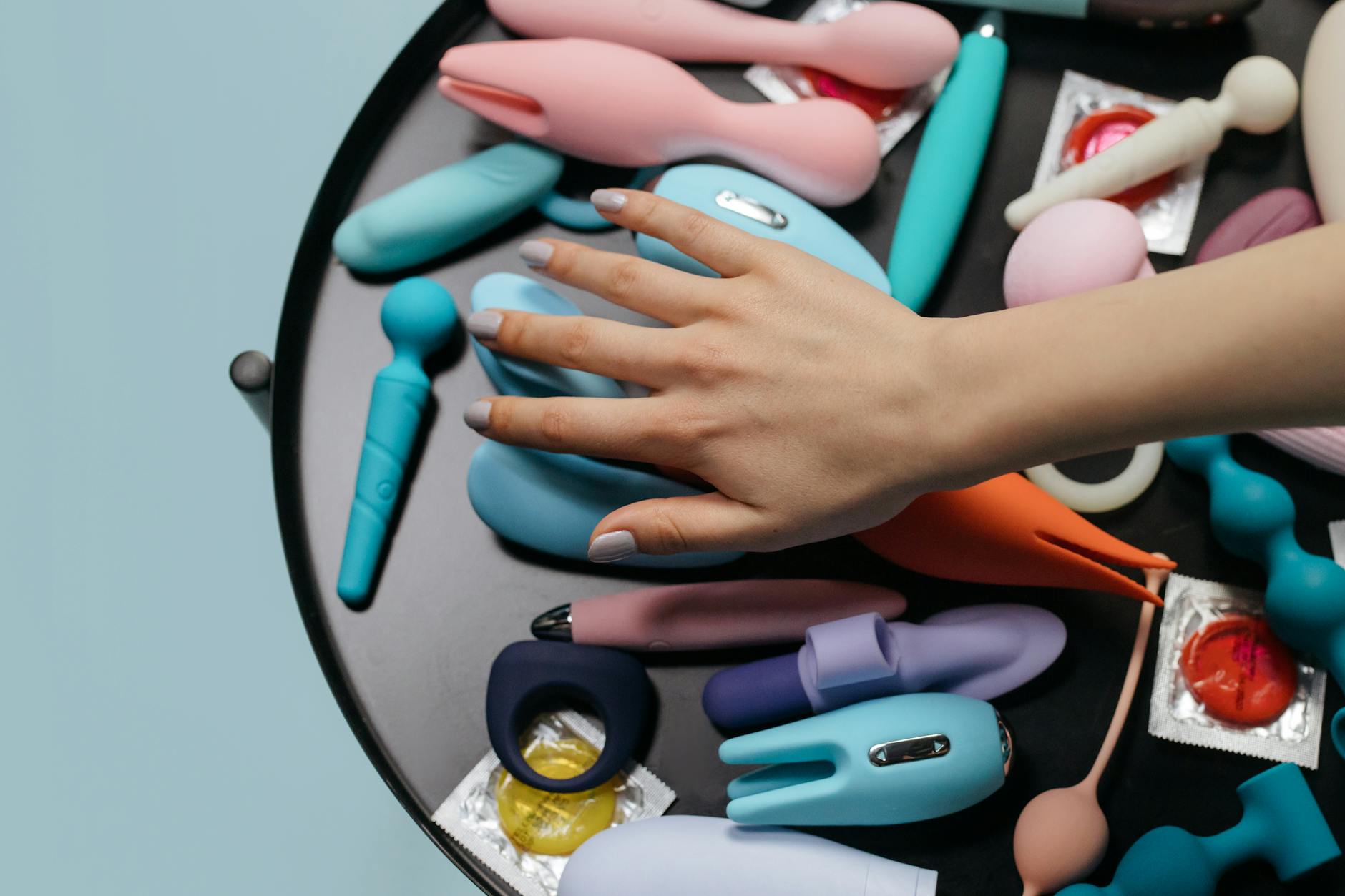
Photo by cottonbro studio on Pexels
Why lemon vibrators work differently on SSRIs
Lemon clitoral vibrators use air-pulse suction rather than traditional vibration. That suction creates a sustained pressure and release pattern that stimulates nerves differently than a buzzing pattern does. On SSRIs, this matters because you're not just fighting delayed arousal. You're also fighting a nervous system that's genuinely less reactive to standard stimulation.
Here's the practical difference: if you were using a traditional vibrator before SSRIs and it took you five minutes to orgasm, you might expect 15-20 minutes on medication. With a lemon vibrator, people often report closer to 10-12 minutes. The suction mechanism seems to hit a different set of nerve receptors, ones that SSRIs haven't dampened as thoroughly.
This is anecdotal clinical observation, not peer-reviewed data. But it's consistent across enough conversations that it's worth trying if you're stuck.
The settings and intensity shift you need to know about
When you start SSRIs, everything gets less intense. Your startle response drops. Your emotional reactivity drops. Your genital reactivity drops. That means the settings you used before might not work anymore.
If you owned a lemon vibrator before medication, you probably spent most time on patterns 2-4. On SSRIs, many people find they need patterns 5-7 even to feel much. It's not that you're broken. It's that the stimulus threshold has moved. You need more input to trigger the same neural response.
Start at pattern 1 and give each level a full two minutes before moving up. Your body will adapt to the medication over 4-8 weeks, and your sensitivity will gradually return. But in the meantime, you're learning what intensity actually works for your current nervous system state.
The warm-up window matters more than you think
Before SSRIs, you could probably go from zero to aroused in a few minutes. Now? Budget at least 15 minutes. Ideally 20. This isn't failure. It's actually useful information about what your body needs right now.
Use that time for things that deepen arousal without direct genital contact. Touch that isn't sexual. Shower together. Read erotica that genuinely interests you. Fantasize intentionally instead of expecting it to happen automatically. These things activate different neural pathways than genital stimulation does, and they prime the sympathetic system so that when you do pick up your lemon vibrator, your body is already in the conversation.
Many people on SSRIs report that this longer warm-up actually improves orgasm quality once it happens. You're not rushing. You're building. And the buildup is part of the pleasure, not the obstacle to it.
Communication with partners shifts too
If you have a partner, this is where the real conversation lives. SSRI-related delayed orgasm isn't about them. It's about neurochemistry. But if you're used to a 15-minute sexual experience and you suddenly need 30, someone has to talk about what that means.
The honest version: "My body needs more time now. That's not a reflection on you. It's the medication. Here's what helps." That's different from "I'm just going to use my lemon vibrator" without context, which can feel like you're opting out of connection. The truth is probably somewhere in the middle. You might use the lemon vibrator solo. You might use it together. But the conversation matters more than the tool.
When to push back and when to accept
Some people on SSRIs lose the ability to orgasm altogether, at least for a window. If that's you after 8-12 weeks, it's worth talking to your prescriber about timing, dosage, or switching medications. There are SSRIs that hit sexual function less hard than others. There are also augmentation strategies (adding another medication to offset the sexual side effects) that actually work.
But here's what I tell my clients: the first 4-6 weeks, give the medication time. The timeline shift is real but temporary. By week 8, you should notice some return of baseline sensitivity. If you're still at zero by week 12, that's when the conversation with your doctor gets practical.
In the meantime, lemon vibrators aren't a workaround. They're a tool that acknowledges the neurochemistry you're actually in, right now, and works with it instead of against it.
One more thing about desire itself
Delay in orgasm is different from loss of desire, but SSRIs can affect both. If you're noticing you don't want sex at all, that's worth mentioning to your doctor separately. Delayed orgasm is common and usually temporary. Loss of desire is rarer and sometimes fixable with different medication choices.
One thing that helps: building pleasure back into your life in smaller ways first. A massage. A bath. Reading something you find genuinely hot. Getting your body reconnected to sensation before you expect it to perform arousal on demand.
Frequently asked questions
How long after starting SSRIs do sexual side effects usually show up?
Usually within the first 1-2 weeks, though some people don't notice until after a month. The timeline varies wildly depending on the specific SSRI, your baseline metabolism, and individual neurotransmitter sensitivity. Some people experience it immediately. Some not at all. The variability is real.
Can switching SSRIs help with delayed orgasm?
Yes. Some SSRIs (like sertraline) are more likely to cause sexual dysfunction than others (like bupropion, which is technically a different class). If sexual side effects are severe and persistent beyond 8-12 weeks, talk to your prescriber about alternatives. It's a legitimate medical conversation.
Does using a lemon clitoral vibrator make SSRI sexual side effects worse?
No. In fact, the opposite. Many people find that lemon vibrators help you access pleasure that would otherwise feel out of reach on medication. The suction mechanism doesn't fight your nervous system the way traditional vibration sometimes does.
Will my orgasms ever feel normal again?
Most likely yes. For most people, sensitivity returns as your body adjusts to the medication over 4-8 weeks. If it doesn't, that's when medical adjustment becomes important. Patience helps, but it's not infinite.
Is it normal to need much higher intensity on SSRIs?
Completely. Your stimulus threshold shifts on SSRIs because you're less reactive to peripheral nervous system input. That's the mechanism. It doesn't mean you're broken or that your body is permanently damaged. It means the medication has done its job of calming your nervous system response, and you're adjusting your technique to match your current neurobiology.
Should I stop my antidepressant because of sexual side effects?
Not without talking to your doctor. The benefits of treating depression usually outweigh the sexual side effects, which are often temporary. But the conversation is worth having. You deserve treatment that works for your mental health and doesn't tank your sexual satisfaction. Solutions exist.
The bottom line
SSRIs change how your nervous system processes pleasure. That shift is real, measurable, and temporary for most people. Your arousal timeline changes. Your intensity needs change. Your tools might need to change too. And that's not failure. It's adaptation. Lemon clitoral vibrators work particularly well during this window because they meet your nervous system where it actually is, not where you wish it would be. Give yourself the same grace you'd give anyone else navigating a major life transition. Your pleasure matters. And it's not broken. Just recalibrating.