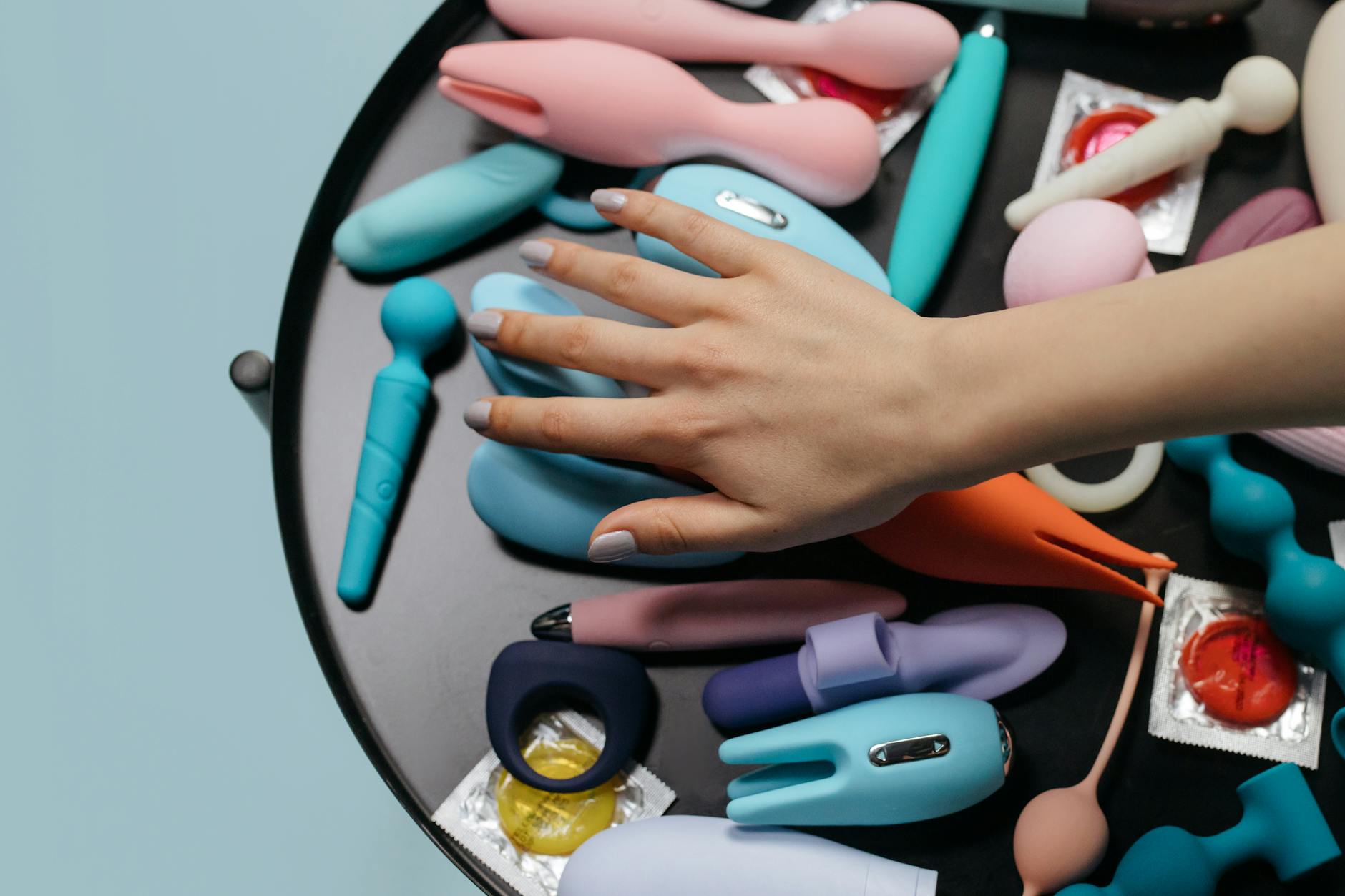
Here's the tension that nobody names
One of you climaxes in three minutes. The other one takes twenty. Or thirty. And somewhere in that gap lives a quiet, creeping anxiety: the person who comes quickly feels like they're broken or too eager. The person who takes longer feels like they're broken too, or worse, like their partner is bored. Both of you end up performing a version of sex that belongs to neither of you.
Mismatched pleasure timelines are one of the most common friction points in long-term relationships, and almost nobody talks about it directly. The silence itself becomes a problem.
Here's what I've learned from working with couples on this exact issue: a lemon clitoral vibrator can be the tool that actually lets you stop performing and start connecting. Not because it speeds anyone up or slows anyone down, but because it removes the pressure of one person waiting or rushing while the other catches up.
Why mismatched timing happens (it's not what you think)
You might assume this is a physical mismatch, but it's usually not. Yes, anatomy plays a role. Clitoral nerve density varies. Some people need more direct stimulation to fire. Some need less. But the real culprit is almost always psychological.
When you're inside someone's body, you're also inside their head. If the person taking longer has spent years feeling rushed or judged, their nervous system stays guarded. Arousal doesn't build because part of their brain is running a clock. The person coming quickly often has a different dynamic: maybe they've learned to prioritize their partner's experience over their own sensation, so they speed through to get to the "real" part.
Neither of you is actually feeling the full spectrum of what you're capable of. You're managing each other's timelines instead of managing your own pleasure.
That's where a device designed for solo clitoral stimulation, like a lemon sexual toy from Helo Nancy Lemons, becomes genuinely useful. Not as a replacement for partnered touch, but as a way to take the performance pressure off the table entirely.
The setup that actually works
Here's what I recommend to couples with timing mismatches:
Separate your climaxes from your connection.
This sounds counterintuitive, but it's the single most liberating shift couples make around this issue. Instead of trying to time your orgasms together or waiting for one person to finish before moving on, you give each person a solo tool for solo sensation. That way, one of you can use a lemon sucker or another clitoral vibrator while the other person uses their hands, or you take turns with focused attention.
The person who climaxes faster finishes first, no problem. Then you transition to whatever comes next. The person who takes longer gets uninterrupted time and attention without the clock running in their head.
No faking. No waiting. No resentment.
Here's the practical flow:
- Start with mutual touch and foreplay that feels good to both of you. Kissing, hands, whatever your normal rhythm is.
- Introduce a lemon clitoral vibrator for whoever wants it. The person using it controls the pace, pressure, and intensity. Their partner can touch them elsewhere, kiss them, talk to them, or just be present.
- Whoever reaches climax first, climaxes. No apology. No rushing the other person.
- Then you transition to whatever's next for you as a couple.
This isn't a band-aid. It's a complete reframing of what partnered sex looks like when timing differs.
The conversation you need to have first
None of this works without talking about it, and most couples avoid this conversation because it feels too vulnerable. You don't want to tell your partner they're too fast or too slow. You don't want to hear that you're holding them back.
But I promise the conversation is shorter and easier than the years of silent resentment that happens if you skip it.
Start here: "I want us to enjoy ourselves more, and I've noticed we're sometimes managing each other's timing instead of just being present. Can we talk about what that's like for you?"
Then listen. Actually listen. Don't defend. Don't explain. Just hear what your partner has been carrying.
The person who comes quickly often says things like: "I feel like I'm doing something wrong" or "I worry you think I'm not into it." The person who takes longer often says: "I feel rushed" or "I stop being in my body because I'm thinking about the clock."
Once you've named it, the solution becomes obvious: you need a tool that lets each person have their own experience without managing the other person's pleasure.
Why a lemon vibrator specifically helps
Lemon clitoral vibrators use suction technology rather than vibration. That matters for this situation because suction creates a different kind of stimulation than friction. It's less about raw intensity and more about rhythmic pulse and pressure.
For mismatched timing, this is helpful because:
- The sensation is distinct and localized. You're not caught between two kinds of stimulation competing for attention. The clitoral vibrator is doing one job very well.
- It requires less mental presence to use. You can hand it to your partner and they can focus inward without constant adjustment or guidance.
- It's predictable. Unlike a hand or a hand-held vibrator, a lemon sucker keeps the same rhythm and pressure. That consistency actually helps some people relax and let arousal build.
Adult toys from Helo Nancy Lemons like the lemon vibrator are designed specifically for solo pleasure, so they work wonderfully in this context where one person is using it while the other person is offering presence and connection.
The emotional piece (which matters more than the tool)
Here's what shifts when you implement this: you stop performing and you start choosing.
When the person who usually takes longer finally gets permission to take their actual time, their nervous system relaxes. They stop anticipating judgment. Arousal actually builds. Many couples tell me that's when they experience the intensity they've both been missing.
When the person who comes quickly gets permission to come quickly without apology, something else happens. They stop rushing through their own sensation to get to the next part. They actually feel their climax instead of enduring it as a logistical problem.
Then you both get to be present for the rest of whatever you're doing, without resentment or pressure.
This works because it's honest. You're not pretending to be on the same timeline. You're acknowledging the difference and building your intimacy around it instead of fighting it.
When timing mismatches are hiding something else
Sometimes, mismatched timelines point to a bigger disconnection. If the person taking longer has lost desire, or the person coming quickly is avoiding real intimacy by speeding through, the vibrator won't fix that.
If you've had the conversation and implemented the tool and something still feels off, consider talking to a therapist or a relationship coach. Sometimes timing differences are just logistical. Sometimes they're a symptom of something that needs actual attention.
But most of the time, when couples finally give themselves permission to have different rhythms and introduce a tool that supports that, everything gets easier.
FAQ
Can using a vibrator together actually bring couples closer?
Yes, if both partners are on board. The key is that you're removing the performance pressure, which creates space for actual connection. You're also breaking a silence that's often been creating distance. When couples stop hiding the timing difference and address it directly with a tool designed for it, most report feeling more intimate, not less.
What if my partner feels insecure about me using a vibrator?
That insecurity usually comes from thinking the vibrator is replacing them. It's not. A lemon clitoral vibrator is a tool for your own sensation, just like your hand is. Frame it as something that helps you be more present with them, not something that takes you away from them. Lots of couples explore clitoral vibrators together, which often reduces the "this is weird" feeling. If the insecurity persists, that's worth exploring with a couples counselor.
Is it normal for one partner to take significantly longer than the other?
Completely normal. Pleasure timelines vary wildly and are influenced by anatomy, stress, medication, how safe you feel, what you're thinking about, and a hundred other factors. The problem isn't the difference. The problem is when couples treat the difference as a flaw instead of just a fact.
How do I introduce this without making my partner feel judged?
Lead with what you want, not what's wrong. "I want us both to feel good without worrying about timing" is different from "You take too long." You can also frame it as something you want to try together, not something that fixes a problem. Many couples approach lemon sexual toys as an exploration, not a solution.
What if we've been faking it for years? How do we come back from that?
With honesty and patience. Faking creates a double layer of distance because now you're managing both the timing difference and the lie. Start by acknowledging it in a low-pressure way: "I think we've both been performing sometimes." Then rebuild trust slowly by having real conversations about what actually feels good, without any pressure to prove it in the moment.
Does timing difference get better with age or practice?
Sometimes. The more you know your own body and can communicate about it, the easier it becomes. But some people's timelines just are what they are. The goal isn't to change your partner. The goal is to stop treating different timelines as a problem and start treating them as just how you both work.
If mismatched pleasure timelines have been quietly eroding your connection, the first step isn't buying a tool. It's naming the issue out loud. Once you do that, you'll find the solution becomes obvious. For many couples, that solution includes a lemon clitoral vibrator or another adult toy designed specifically for clitoral pleasure. But the real shift happens when you stop performing and start choosing. Everything else follows from that.
If you'd like to talk through how to navigate this in your specific relationship, reach out to us. We're here to help couples find their rhythm.