
Here's the disconnect
You know exactly how to make yourself come. Alone, in five minutes, with a specific rhythm and pressure. But the moment your partner is involved, your body becomes a stranger. The same sensations that work solo feel off. Your clitoris goes quiet. Your pleasure shuts down, even though you want it to work.
This isn't rare. This is one of the most common patterns I see in couples therapy: pleasure that's vivid and reliable alone, but muted or absent with a partner. And the shame around it can be brutal because you blame yourself, or you blame the relationship, when actually it's a very specific problem with a straightforward fix.
Why your body splits pleasure from intimacy
Your nervous system learned to separate them. Maybe you spent years masturbating in secret, building neural pathways that connected solo pleasure to safety and privacy. Maybe partnered sex felt rushed or conditional. Maybe you learned that your desire made your partner uncomfortable. Or maybe you simply never showed your partner what actually works for you, so you've been faking or forcing responses that don't match your real body.
When your clitoris only knows pleasure in one context (alone), it doesn't automatically translate to another (with someone else). Your body has learned that intimacy and real pleasure are different experiences.
Here's what matters: this isn't a character flaw. It's a learned pattern. And learned patterns can be rewired.
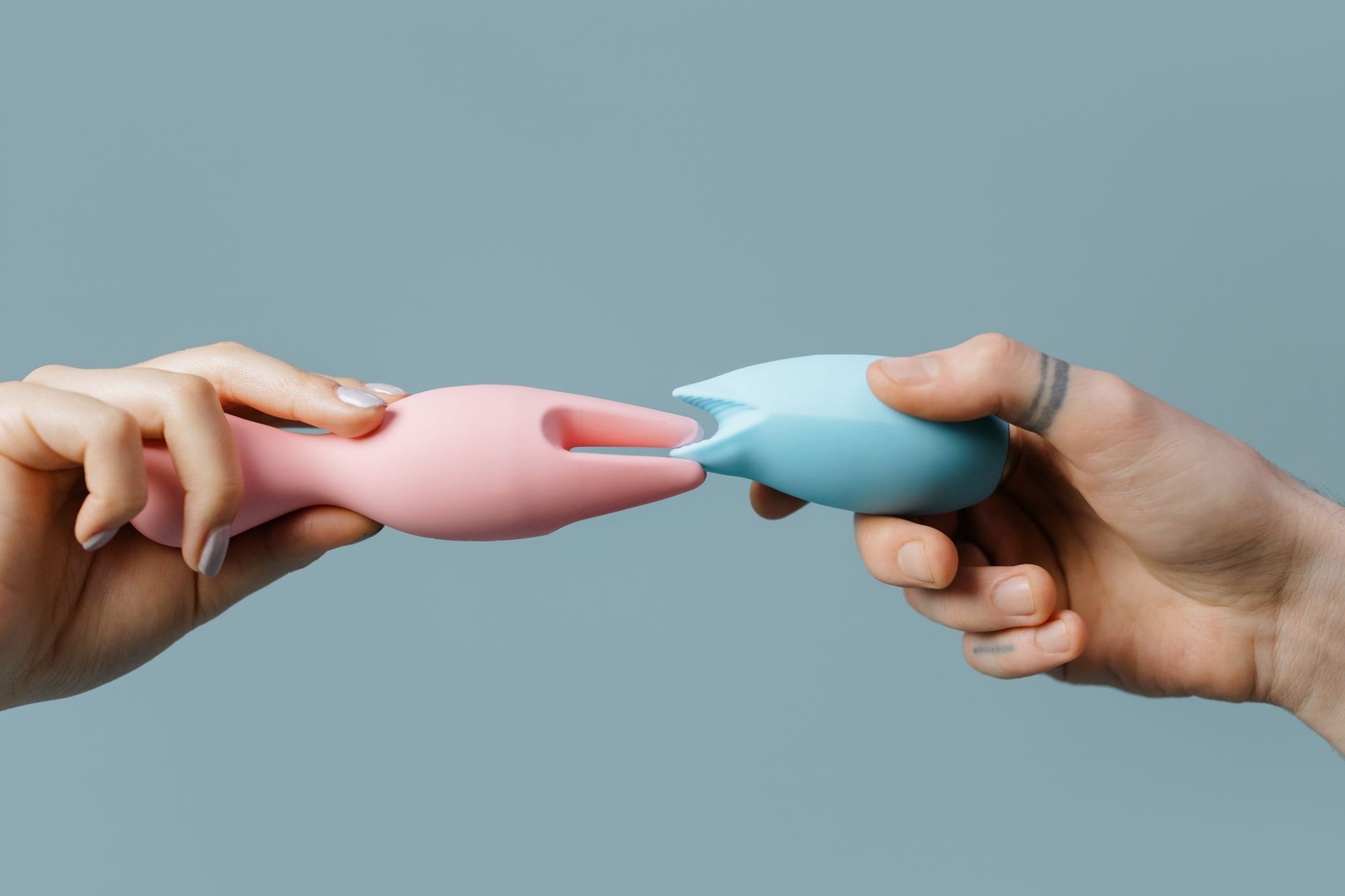
Photo by cottonbro studio on Pexels
The role of a lemon clitoral vibrator in rebuilding that bridge
Lemon vibrators, especially suction-based models like the Lem, create a specific advantage here. They're consistent in a way fingers, tongues, and most traditional vibrators aren't. That consistency is crucial because it gives your nervous system permission to relax into the same sensations with a partner present that you've only felt alone.
When you use a lemon vibrator with a partner watching, or alongside their touch, you're not asking your body to suddenly produce pleasure it's been conditioned to suppress. You're introducing a familiar sensation (the exact stimulation your clitoris knows and trusts) into a new context (intimacy).
The vibrator becomes a translator between your two worlds.
Four ways to use lemon vibrators to reconnect pleasure and intimacy
Start with observation, not performance
Use your lemon vibrator alone while your partner is in the room but not touching you. Let them watch. Not for their benefit, though many partners find this profoundly connecting. For yours. Your body needs to learn that pleasure is safe even when someone you care about is witnessing it.
This removes the pressure to perform. You're not trying to look sexy or come on schedule. You're practicing the simple act of letting your partner see your real pleasure. That's the whole task.
Introduce light parallel touch
Once you're comfortable with observation, try this: use your lemon vibrator on yourself while your partner touches you somewhere non-sexual. Their hand on your thigh. Their lips on your shoulder. Their fingers interlaced with yours.
The point is to blur the boundary between solo and partnered sensation. Your clitoris gets the familiar input it trusts. Your body gets the presence and touch of someone you care about. They're happening at the same time, in the same space, gradually rewiring the connection between intimacy and pleasure.
Let them control the rhythm
This is a step toward deeper intimacy. You hold the vibrator (or they do), but they guide the pace. Not the pressure, the rhythm. This is vulnerable because you're trusting them with a learned behavior, but it also begins to merge their presence with your specific pleasure.
Many couples find that once a partner understands the exact rhythm their partner's body needs, it creates a form of intimacy that transcends the physical. They're fluent in your language now.
Integrate it into partnered sex
Eventually, the lemon vibrator stops being a bridge and becomes part of your shared experience. You use it during foreplay. Or during penetrative sex. Or during oral sex. The point is that your pleasure isn't something you do alone, and then separately attempt with a partner. It becomes collaborative.
For many couples, introducing a lemon clitoral vibrator into shared sex actually deepens the connection because both partners are now invested in the same outcome: your orgasm.
Conversations you need to have first
Before you introduce your vibrator to partnered sex, you need to name what's been happening. Not accusingly, not as criticism. Just honestly. "When we're together, my body doesn't respond the way it does when I'm alone. I want to fix that, and I want your help."
That sentence does three things: it names the problem without blame, it positions your partner as an ally, and it gives them permission to care about your pleasure without making it their responsibility.
Then talk about what you need. "I want to show you exactly what feels good to me. I want to use a vibrator. I want to take my time." Specificity matters because it removes ambiguity. Your partner won't have to guess what you want.
If your partner resists, that's useful information. Resistance often points to insecurity ("Does that mean I'm not enough?") or to different values around pleasure. Both are worth addressing directly, ideally with a therapist. But a partner who can't celebrate your pleasure is a partner who isn't ready for real intimacy.
The timeline is longer than you think
Don't expect your nervous system to suddenly merge solo and partnered pleasure in a week. These patterns have often been reinforced for years. Rewiring takes time, consistency, and a genuine willingness from both of you.
Some couples see shifts in two to four weeks. Others take months. Both are normal. Your body will let you know when something feels different. Usually it's subtle: a moment where pleasure builds slightly faster, or where you're less in your head, or where you actually orgasm instead of faking. Those small shifts are real progress.
What if your partner still makes you freeze
Sometimes the problem isn't about technique or timing. Sometimes being with a specific partner triggers an old nervous system response. Maybe they remind you of past abandonment. Maybe there's an unresolved conflict. Maybe you've internalized their discomfort about sex.
In those cases, a lemon vibrator helps, but it doesn't fix the root problem. That's when you need to address the relationship itself, ideally with couples therapy. A vibrator is a great tool. It's not a substitute for genuine emotional safety.
FAQ
Can using a lemon vibrator alone actually damage my ability to come with a partner?
No. But it can reinforce the separation if you never progress beyond solo use. The magic isn't in the vibrator itself. It's in using it as a bridge to introduce your partner to your pleasure gradually, rather than keeping pleasure as a solo experience forever.
My partner says vibrators mean they're "not enough." How do I respond to that?
With clarity. "This isn't about you being enough or not enough. This is about me learning to feel safe experiencing pleasure with you. Help me do that." If they refuse, you have a partner problem, not a vibrator problem. That conversation is worth having with a therapist.
How long before I can actually use a lemon vibrator during sex with my partner?
Every couple is different, but expect 4-8 weeks of graduated steps if both partners are willing. Some couples move faster. Some need more time to build trust and comfort. The progression I described (observation, parallel touch, guided rhythm, integration) is a roadmap, not a strict timeline.
Is it okay to fake an orgasm while using a lemon vibrator with my partner?
No. That defeats the entire purpose. You're trying to rebuild the connection between pleasure and intimacy. Faking reinforces the split you're trying to heal. If you're not feeling pleasure, tell them. That honesty is the actual intimacy.
What if I can only come with a specific pattern the lemon vibrator makes?
That's fine. Many people have a very specific pleasure map. The goal isn't to become flexible. It's to let your partner understand your map and work with it. Once they know you need pattern 4 at speed 2, that becomes their knowledge too.
Can we use a lemon vibrator if I have trauma around sex or touch?
Possibly, but you need professional support first. A lemon clitoral vibrator can help restore pleasure and rebuild safety, but if you have trauma, you need a trauma-informed therapist working alongside any tool. Don't use a vibrator as a substitute for healing. Use it as part of a larger process.
Reconnection is possible
Your pleasure and your intimacy aren't meant to live in separate worlds. They're meant to deepen each other. When your body learns to trust that pleasure is safe even in the presence of someone you love, something shifts. The person who knows your body becomes the person you want to be with. Vulnerability becomes sexy because it's real.
A lemon vibrator can help you bridge that gap. But the real work is the conversation, the willingness, and the slow, patient decision to let your partner in.
If you're struggling with this dynamic or need more personalized guidance, reach out. Contact Helo Nancy Lemons and let's talk about what reconnection looks like for you.