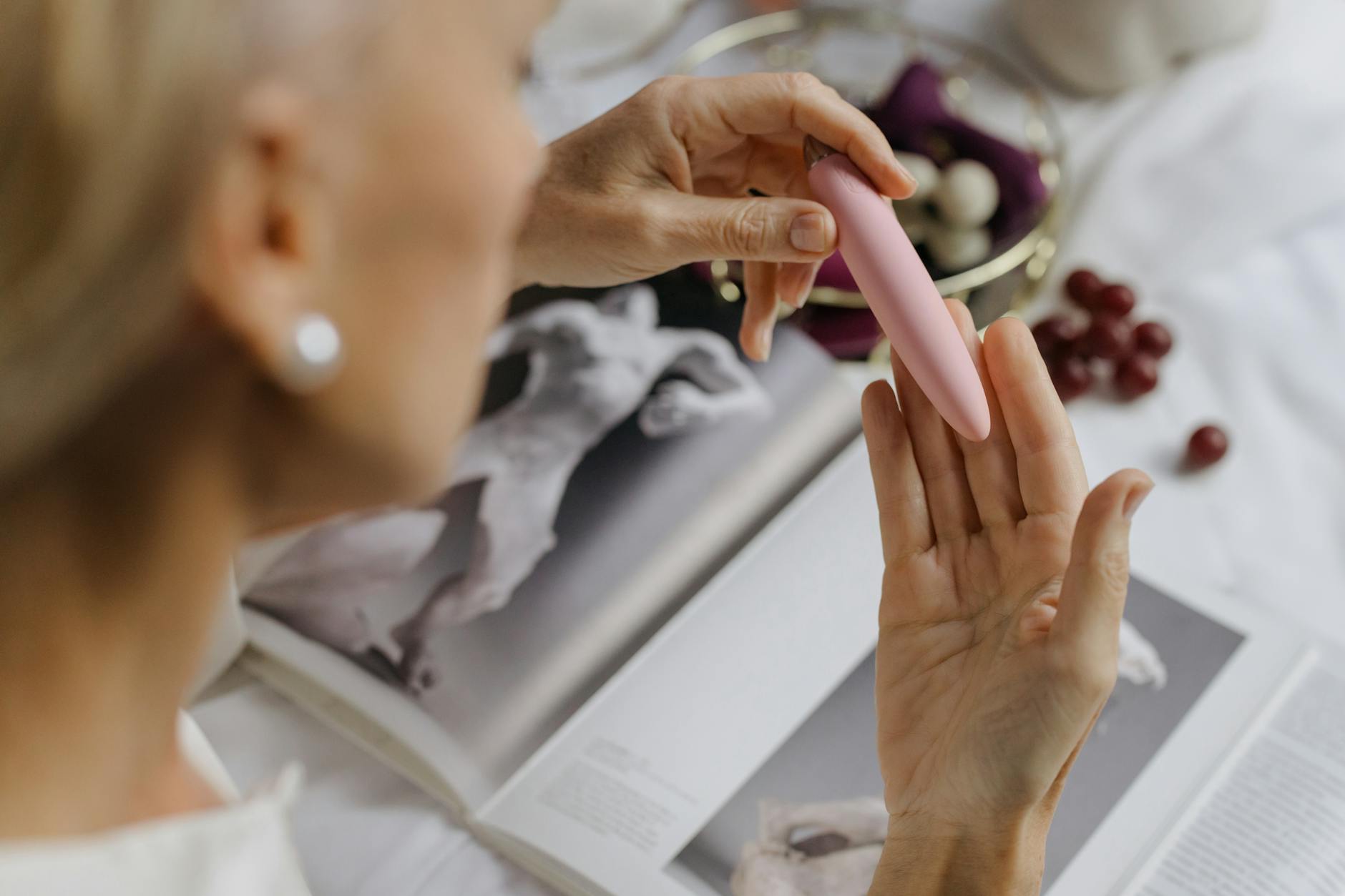
When new means nervous
There's a specific discomfort that shows up when you're intimate with someone for the first time. It's not that the person is wrong or that your body doesn't want this. It's that your nervous system is in high alert. The stakes feel higher. Your brain is running a hundred simultaneous threat assessments. Direct clitoral touch that felt amazing solo suddenly feels exposed, or too intense, or weirdly vulnerable.
That gap between solo pleasure and partnered pleasure is real and common. And it's exactly where clitoral vibrators like the Lem become useful tools for reconnection.
The mechanism is simpler than you might think. Vibration creates distance between your nervous system and the raw sensation. It diffuses intensity. It also gives you something to focus on besides the fact that someone else is watching, or waiting, or wanting something from you. For many people, that shift alone is enough to access pleasure again.
Why new partners trigger clitoral discomfort
Here's what's actually happening physiologically. When you're with someone new, your sympathetic nervous system (fight-or-flight) is competing with your parasympathetic system (rest-and-digest). Direct clitoral stimulation is incredibly sensitive to nervous system state. If you're even slightly activated, that sensitivity becomes hyperawareness. What felt good becomes too much.
Add self-consciousness to the mix and you've got a real barrier. You're wondering if you're taking too long, if your body looks right, if you're reacting the right way. That cognitive load shuts down arousal. The clitoris is exquisitely attuned to distraction.
The other piece is sensation memory. If you've had a bad experience with a previous partner, or if you're recovering from how your clitoral sensation feels different after trauma, your nervous system remembers. New partner doesn't equal safe partner to your body. It takes time to reprogram that.
How clitoral vibrators work differently with a new partner present
When you're using a lemon vibrator like the Lem solo, you control everything. Pace, pressure, angle, when to speed up or pause. When a partner is involved, that control is theoretically shared. But psychologically, it feels less certain. You're managing their experience, your experience, and your own insecurity all at once.
Introducing a vibrator changes the dynamic in three concrete ways.
First, the vibration itself is a buffer. You're not experiencing direct finger pressure or tongue contact from your partner. You're experiencing modulated vibration. That creates a gentler on-ramp for arousal. Second, holding or controlling the vibrator keeps you anchored in your own sensation. You decide when it touches you, how long it stays, what speed. That agency is restorative. Third, the vibrator becomes a focus object for both of you. Instead of your brain spiraling about performance or appearance, your attention can narrow to sensation.
This is especially powerful if your partner is new to this. They can't accidentally use too much pressure or miss your rhythm. The vibrator does the heavy lifting while you both learn each other.
The setup that reduces nervous system activation
Timing matters. You want your first attempt at partnered vibration to happen when you're already somewhat aroused, already somewhat comfortable with this person. This isn't the moment to introduce a vibrator when you're tense or rushing. That's a setup to feel worse, not better.
Start solo first. Use the Lem by yourself for 10-15 minutes, or whatever brings you close to where you want to be. Your nervous system will downregulate. Arousal will start to build. Then invite your partner into the space. They don't have to do anything yet. Just be present, maybe touching you non-genitally. Hands on your arms, your back, your hair.
Once you're already somewhat in your body, you can introduce the vibrator with them. Some people prefer their partner to hold it. Others prefer to hold it themselves while their partner touches them elsewhere. There's no rule here. The rule is: whatever keeps you feeling in control.
Location matters too. If direct clitoral pressure feels too raw, try using the Lem on your outer vulva first. The suction and vibration work beautifully on the labia majora and the general clitoral area without being pinpoint-direct. You get stimulation without the hyperintensity.
Communication without making it weird
Here's the thing most people get wrong. They think talking about discomfort during sex will kill the mood. It actually does the opposite. It gives your nervous system permission to relax. You're not hiding anything. You're not performing.
You don't need to have a clinical conversation beforehand (though some people prefer that). You can communicate in real time, simply. "This feels too direct right now" or "I like this better if you go slower" or "Can we try a different angle." Three sentences. That's all you need.
If your partner is new to using a vibrator with you, set one piece of guidance: less pressure than they think. Most people instinctively press harder. Vibrators work best with light contact. The vibration does the work, not the pressure. A 10-second orientation can save you frustration.
Many partners actually feel relieved when you bring a vibrator into it. They're not wondering if they're doing it right. They can focus on other ways of touching you, being with you, rather than trying to nail one specific thing.
When sensitivity shifts partway through
Sometimes clitoral sensitivity changes mid-session. You're enjoying the vibration, and then suddenly it feels like too much. Your body is telling you something. Maybe your nervous system spiked. Maybe the angle shifted. Maybe you just need a break.
This is normal. Pause. Use the vibrator on a different area, or switch it to a lower setting, or just take a few minutes. Your partner doesn't need to freeze. They can keep touching you elsewhere while you recalibrate.
This is where having something under your control is magic. If your partner was touching you directly and you needed to tap out, there's awkwardness. With a vibrator that you're holding or controlling, you can modulate instantly. No negotiation required.
Building confidence through repetition
The discomfort you feel with a new partner isn't permanent. It shifts with familiarity. Each time you have a positive experience of pleasure with them, your nervous system gets the memo: this is safe. Gradually, you'll need the vibrator less as a buffer. Or you might just like using it because it feels good, not because you're managing anxiety.
This is worth mentioning: you're not broken if you need a vibrator to feel comfortable. You're not dependent on it. You're using a tool that helps your nervous system relax enough to access what's already there. That's strategy, not crutch.
Many people find that once they've had a few positive experiences with their partner and a vibrator, direct touch feels different. Less loaded. More possible. Your body learns that this new person isn't a threat. The parasympathetic nervous system takes back the lead.
When to explore lemon clitoral vibrators specifically
Lemon vibrators like the Lem and other designs from Helo Nancy Lemons use suction technology combined with vibration. This means they're gentler on sensitive tissue than traditional vibrators, and they work beautifully for anyone whose clitoris feels reactive or overwhelmed. The suction provides a diffused sensation across a wider area rather than pinpoint intensity.
If you've been avoiding direct touch because it feels too raw or too intense, suction-based lemon adult toys often feel more approachable. They work at lower speeds without losing effectiveness. They're also intuitive to use with a partner because the technology does most of the work.
The conversation with your partner
If this is someone you want to keep seeing, it's worth saying something like: "I get nervous when I'm new with someone. My body takes a minute to trust. I'm wondering if we could use a vibrator next time we're together. It helps me relax and actually enjoy this."
Most partners will respond with relief. They're probably wondering if something's wrong too. You're giving them permission to relax, and you're offering a concrete solution. That's leadership in your own pleasure.
If your partner responds with resistance or makes you feel bad about needing support, that's information. That tells you something about whether this person respects your needs. In good relationships, these conversations are easy. If it's hard, it matters.
People Also Ask
Can I use a lemon vibrator if my new partner makes me feel self-conscious?
Yes, absolutely. Introducing a vibrator can actually reduce self-consciousness because it shifts the focus from your body's appearance or performance to the sensation itself. The vibrator becomes a third thing in the room, and suddenly you're both focused on what feels good rather than on observation. Many people feel less exposed with a vibrator because they're in control of it.
How long does it usually take to feel comfortable with clitoral stimulation around a new partner?
It varies widely, but most people report feeling noticeably more at ease within 3-5 positive experiences with the same partner. Your nervous system learns through repetition that this situation is safe. Some people adjust in one or two sessions, especially if they're naturally comfortable with their body. Others need more time. There's no timeline you should hit.
Should I tell my new partner I normally use vibrators solo before I introduce one?
You don't have to disclose your solo practices unless you want to. But it can help to frame it as something you want to try together rather than something you're bringing in because something's wrong. Try: "I'm curious about using a vibrator with you" rather than "I have trouble being satisfied without one." The framing matters for how they receive it.
What if my partner wants to use the vibrator but I'm not ready?
Then they wait. Your comfort is the prerequisite here, not their curiosity. If they push or pressure you to introduce vibration before you're ready, that's a respect issue. Full stop. Good partners meet you where you are.
Can lemon clitoral vibrators help if I have trauma around touch?
They can be part of a larger picture, but if you're working through trauma, a therapist trained in somatic work is important too. Vibrators can help with gradually reintroducing sensation in a controlled way, but they're not a substitute for trauma-informed support. Talk to your therapist about introducing partnered pleasure if that's relevant to your healing.
How do I know if my discomfort is about my partner or about me?
Pay attention to whether the discomfort shifts with different partners or different contexts. If you feel the same activation with every new person, it's likely about your nervous system's response to novelty. If you feel fine until a specific partner does something, it's about them. If you feel uncomfortable in every sexual situation, solo and partnered, there might be a broader dysregulation worth exploring. Your gut usually knows the difference.
When this is about more than nervousness
If clitoral discomfort persists across multiple partners and contexts, or if it's paired with pain, numbness, or severe anxiety, it's worth checking in with a provider trained in sexual health. Sometimes discomfort signals a medical issue like dermatitis, nerve irritation, or hormonal shifts. Sometimes it's psychological. A good clinician can help you figure out which.
For most people navigating new-partner nervousness, though, time plus the right tools plus communication gets you there. Your body knows how to feel good. Sometimes it just needs permission and a little support to remember in front of someone new.
Your pleasure matters. Building confidence in it matters even more.