
How to Use Lemon Vibrators When Clitoral Sensation Feels Numb or Muted
Let's be real. You're touching yourself and feeling almost nothing. Maybe your partner is doing exactly what used to work, and your body isn't responding. Maybe you've tried stronger vibrators, different angles, longer warm-up time, and still get that muffled, distant sense of stimulation instead of actual feeling.
Clitoral numbness is fixable. And lemon vibrators, especially suction-based designs like the Lem, often work dramatically better for reclaiming sensation than traditional buzz toys.
What actually causes clitoral numbness and reduced sensation
Clitoral sensation loss isn't random. There are concrete reasons your body might feel muted.
Nerve compression from pelvic floor tension. When the pelvic floor muscles clench chronically (from stress, trauma history, or just chronic holding), they squeeze the nerves that feed sensation to the clitoris. It's like pressing a nerve in your neck and feeling your arm go numb. The tissue is there, but the signal isn't getting through clearly.
Medication side effects. SSRIs and some antidepressants are notorious for this. Antihypertensives, antihistamines, and certain pain medications can also dull sensation. If you started a new med and noticed numbness around the same time, bring it up with your prescriber. Dosage or timing changes can sometimes help, and there are alternatives.
Overuse and desensitization. If you've been using a high-intensity traditional vibrator daily for months, your nerve endings adapt. They stop responding as readily to that same stimulus. It's not permanent, but it requires a reset.
Hormonal shifts. Estrogen supports nerve function and blood flow to genital tissue. When it drops (perimenopause, certain birth control changes, extended hormonal shifts), sensation can flatten. The tissue is still there, but it's less reactive.
Nerve damage from childbirth, surgery, or pelvic injury. This is less common but real. Episiotomy, forceps delivery, pelvic floor surgery, or past trauma can scar nerve pathways. Sensation may be permanently altered in specific areas, or it may take months to partially recover.
The key insight: numbness usually means your nerves aren't being stimulated effectively, not that you've lost the capacity to feel.
Why air-suction vibrators like the Lem work differently for numb sensation
Traditional vibrators buzz at a fixed frequency. That buzz has to penetrate tissue and activate nerve endings through direct mechanical force. If your nerves are sluggish or your tissue is desensitized, that approach often fails.
Air-suction lemon vibrators operate on a completely different principle. They create gentle suction pulses that expand and contract the tissue around the clitoris. This does several things simultaneously:
It activates a different nerve population. The clitoris has multiple types of nerve endings. Some respond best to direct pressure, others to stroking, others to the unique sensation of suction and release. When pressure-based sensation is numb, suction often bypasses that numbness and hits nerve endings that are still responsive.
It increases blood flow locally. Suction draws blood into the tissue, which wakes up sensation and makes nerve endings more reactive. More blood flow means more oxygen, more neural activity, and better feedback.
It distributes stimulation differently. Suction spreads the stimulus across a wider area of tissue instead of concentrating force on a single point. For numb sensation, distributed stimulus is often more effective than intense localized pressure.
It doesn't require the same degree of arousal to feel. Traditional vibrators often need you to already be somewhat aroused for sensation to register. Air-suction devices can feel distinct and interesting even at lower arousal levels, which means you're getting real sensation feedback to build on.
Resetting desensitized nerves: the practical protocol
If you've been using the same intense vibrator daily, your clitoris might be in a temporary desensitized state. Recovery is possible, but it requires a pause.
Take a break for 3-7 days. Completely stop vibrator use. Let your nerve endings reset. It feels counterintuitive when you're frustrated, but it works.
Switch to a lower-intensity device. When you resume, choose something gentler. A lemon clitoral vibrator on its lowest setting, or an air-suction toy like the Lem at pattern 1 or 2, gives you sensation without the numbing overwhelm of high intensity.
Extend your warm-up. Spend 15-25 minutes on non-genital touch. Hands, lips, breath on your neck, inner arms, breasts. Get your nervous system fully activated before introducing any vibrator. Arousal increases blood flow and nerve sensitivity dramatically.
Vary your stimulation. Don't use the same tool every single time. Alternate between air-suction toys, hands, and partner touch if you have one. Your nervous system adapts to novelty and to varied sensation.
Use water-based lubricant. Lube reduces friction and changes how sensation travels across tissue. It also supports healthy tissue and can actually increase nerve responsiveness.
Addressing pelvic floor tension to restore sensation
If your numbness comes with any sense of tightness, pain, or difficulty relaxing your pelvic floor, physical therapy is worth exploring.
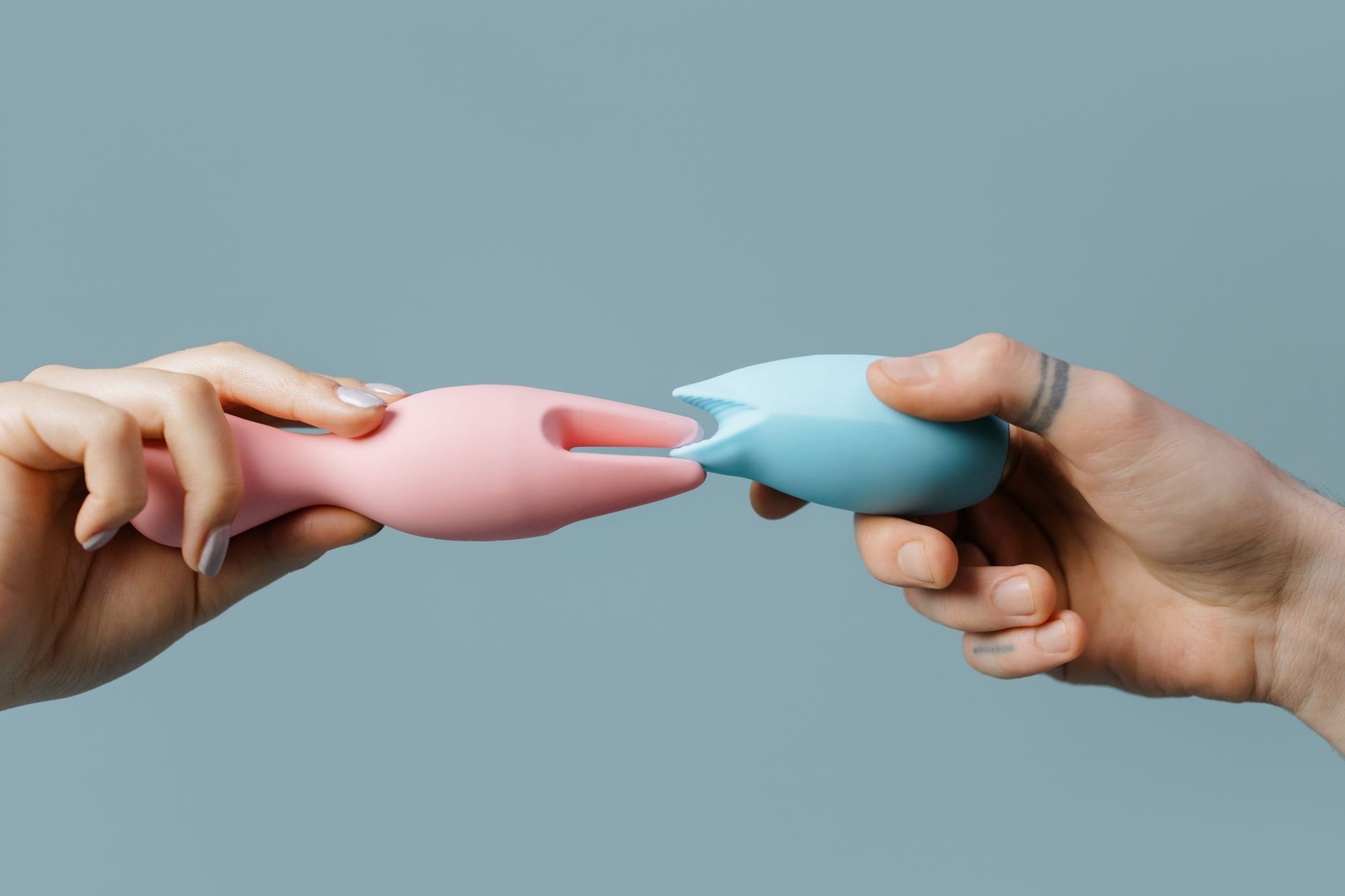
Photo by cottonbro studio on Pexels
A pelvic floor physical therapist can assess whether your muscles are holding tension, teach you to consciously relax (not just Kegel), and sometimes identify trigger points that, when released, restore sensation immediately. It's not a quick fix, but it addresses the root cause rather than just working around it.
In the meantime, when using any lemon vibrator or clitoral vibrator:
Start with intentional relaxation. Before you begin stimulation, take three deep breaths and actively soften your pelvic floor. Feel it open. Many people discover they're clenching without realizing it.
Use lower intensity longer. A Lem on pattern 2 for 20 minutes often works better than pattern 5 for 5 minutes when you have pelvic floor tension. Lower intensity allows your muscles to stay relaxed.
Pause and breathe if you feel tightening. If you notice your pelvic floor clenching up during use, stop for 30 seconds, breathe deeply, and consciously relax before continuing. You're teaching your body a new pattern.
This combination of physical therapy plus intentional relaxation during use often restores sensation in weeks, not months.
Working with medication-related numbness
If your sensation loss aligns with starting an SSRI or other medication, talk to your prescriber. Don't stop the medication, but explore options.
Some people find that timing helps. Taking your dose at night instead of morning might shift when side effects peak. Some find that a lower dose maintains benefits while reducing sexual side effects. Others switch to a different medication in the same class that has a better sexual side-effect profile (this is medically legitimate, not a workaround).
In the meantime, lemon vibrators can help you feel something during a period when sensation is pharmacologically suppressed. Air-suction toys are often more effective than traditional vibrators when you're on medications that numb sensation, because suction creates a distinct tactile experience that can sometimes bypass medication-induced numbness.
Hormonal shifts and sensation recovery
If numbness started around a hormonal change (stopping birth control, entering perimenopause, after childbirth), time and consistency help.
Your body is recalibrating its nerve function based on new hormone levels. This can take 3-6 months. Using lemon vibrators consistently (but not obsessively) during this adjustment period actually helps. You're sending feedback to your nervous system: this sensation matters, keep developing pathways for it.
Try using an air-suction lemon vibrator 2-4 times per week during hormonal transitions. Not daily (that can lead to desensitization), and not with high intensity. Moderate, regular use helps restore sensation faster than either complete avoidance or daily use.
When sensation loss needs medical attention
If numbness appeared suddenly after an injury, surgery, or pelvic event, or if it's accompanied by pain, see a healthcare provider. Some nerve damage is temporary and resolves on its own. Some responds to physical therapy. Some requires evaluation to rule out underlying conditions.
Genitorurinary syndrome of menopause (if you're in that stage), nerve damage from trauma, or structural issues might need specific treatment. But most medication-related or tension-related numbness responds well to the approaches above plus consistent use of the right tool.
The reset: giving yourself permission to feel differently
Here's the part nobody says: numbness often arrives with a psychological layer. You've been frustrated. You've tried things that didn't work. Your nervous system learned to brace. You might be skeptical that anything will actually feel good again.
Lemon vibrators help partly because they produce genuinely different sensation, but also because they break the pattern. When you try a new approach (air-suction instead of buzz, lower intensity instead of higher, distributed stimulus instead of localized), your brain doesn't carry the baggage of "this didn't work before."
Give yourself 4-6 weeks of consistent use with new tools and approaches before deciding whether something is working. Sensation restoration isn't linear. You'll have days where you feel more than others. That's normal. Your nervous system is waking up.
You deserve to feel pleasure. Not someday, not hypothetically. Now, in whatever form it actually takes for your body right now.
FAQ: Clitoral numbness and lemon vibrators
Can clitoral numbness be permanent?
Most clitoral numbness is temporary or partially reversible. Numbness from medication, tension, or desensitization typically improves with intervention. Numbness from certain types of nerve damage may be permanent in specific areas but often partial sensation returns over months. Work with a healthcare provider to understand your specific situation. The approaches in this article help maximize whatever sensation recovery is possible.
Why does my clitoris feel tingly instead of numb when I use a vibrator?
Tingling often means your nerves are waking up. This can happen during the early stages of recovery from desensitization or tension. It's usually a good sign. It might feel weird compared to how sensation used to feel, but it's your nervous system responding. Tingling usually evolves into clearer sensation over a few weeks as you keep using gentle, varied stimulation.
Is air-suction better than regular vibration for all types of numbness?
Not universally. Air-suction (like the Lem) often works better for medication-related numbness, tension-related numbness, and desensitization. For some types of nerve damage, traditional low-frequency vibrators work better. For others, a combination approach using both types helps. Start with whichever resonates with you, and don't hesitate to explore other options if something isn't working after 3-4 weeks.
How long does it take to regain sensation?
It depends on the cause. Desensitization from overuse often improves in 2-4 weeks with a break and lower-intensity use. Medication-related numbness can start improving within days of a dose adjustment or timing change, or it might take weeks. Tension-related numbness often improves significantly with pelvic floor therapy within 4-8 weeks. Hormonal changes might take 3-6 months. The common thread: consistency and patience matter more than intensity.
Can my partner help me regain clitoral sensation?
Absolutely. Partner touch is often more nuanced than solo use, and the emotional connection can increase overall arousal and nerve responsiveness. The best approach is usually a combination: solo exploration with lemon vibrators to understand what your body responds to, plus partnered touch as that sensation develops. Communication is key. Tell your partner what you're feeling (or not feeling), what you want to try, and what helps.
Should I see a doctor if I have sudden clitoral numbness?
If numbness appeared suddenly (within days), yes. If it came on gradually over weeks or appeared alongside a medication or hormonal change, it's usually safe to start with the self-care approaches above and monitor for improvement over 2-4 weeks. If nothing improves or it worsens, or if it's accompanied by pain, see your provider. Numbness combined with pain can indicate pelvic floor dysfunction or other issues that benefit from professional evaluation.
Sources
Clitoral nerve anatomy and sensation research builds on foundational work in sexual health neuroscience by researchers including Komisaruk, Whipple, and recent studies in the Journal of Sexual Medicine on sensation recovery post-trauma and post-medication adjustment. Pelvic floor physical therapy outcomes come from research in the International Journal of Gynecological Cancer and the American Physical Therapy Association guidelines for pelvic floor dysfunction. Information on medication-related sexual side effects draws from FDA adverse event data and clinical guidance from the American Psychiatric Association.
If you're navigating numbness alongside relationship stress or other life factors, we're here to help. Get in touch.