Let's start with what nobody talks about
Your clitoris doesn't lose sensitivity when you change partners. But it often feels that way. You move from one relationship to another and suddenly your body isn't responding the same way. You're touching the same spot, but the signal is different. That can feel broken, unfaithful, or just confusing.
It's none of those things. It's neuroscience and trust and a little bit of muscle memory all tangled together.
Here's what I tell clients: your clitoral sensation is not a fixed setting. It's a negotiation between your nervous system, your mental state, the specific touch of this particular partner, and what you've learned to expect from sex itself.
Why sensation actually changes between partners
Three layers are at work.
Physical layer. Everyone has slightly different hands, different pressure, different rhythm. Your partner's fingertips aren't the same shape as your ex's. The angle they approach from is different. Their timing is different. Your clitoris is highly specialized. It notices these things immediately, and your arousal responds accordingly.
But here's the part that matters more: your brain remembers what worked before. If your last partner had a firmer touch and longer patience, your body learned that pattern. When your new partner touches you with a lighter hand or moves faster, your nervous system reads that as "not the right signal" before your conscious mind even registers the touch.
Psychological layer. Trust and safety literally alter blood flow to your clitoris. This isn't metaphorical. When you're anxious, your body diverts resources away from pleasure pathways and toward fight-or-flight systems. A new partner means new vulnerability. Even if you like them, even if you want them, your nervous system is gathering data. That takes energy. Your clitoris gets less of it.
There's also the question of what you expect. If you've been told your pleasure is complicated, or that you take a long time, or that you're hard to please, you'll often unconsciously produce exactly that result. The expectation becomes a script.
Attachment layer. Sensation deepens with familiarity. After months or years with someone, their touch becomes integrated into your sense of safety. You don't have to negotiate it anymore. Your body relaxes into it. That doesn't happen immediately with someone new.
What "inconsistent sensation" actually means
Let's separate the three things people usually mean when they say this.
Slower arousal with a new partner. Your clitoris is fine. Your nervous system is just being cautious. This is actually protective. It gives you time to gather information, set boundaries, and figure out if this person is worth your vulnerability.
Reduced intensity in orgasm. This often feels like you're going through the motions but not quite getting there. It's usually because you're performing the role of someone who gets there easily, rather than actually letting pleasure build. With a new partner, you're hyperaware of how you look, how long you're taking, whether you're being too much.
Feeling responsive alone but numb with a partner. This is different. This usually means the safety gap is wider than you realized. Or you've learned that solo pleasure is something you protect, and partnered pleasure is something you negotiate away.

Photo by Madison Inouye on Pexels
Why lemon vibrators help bridge this gap
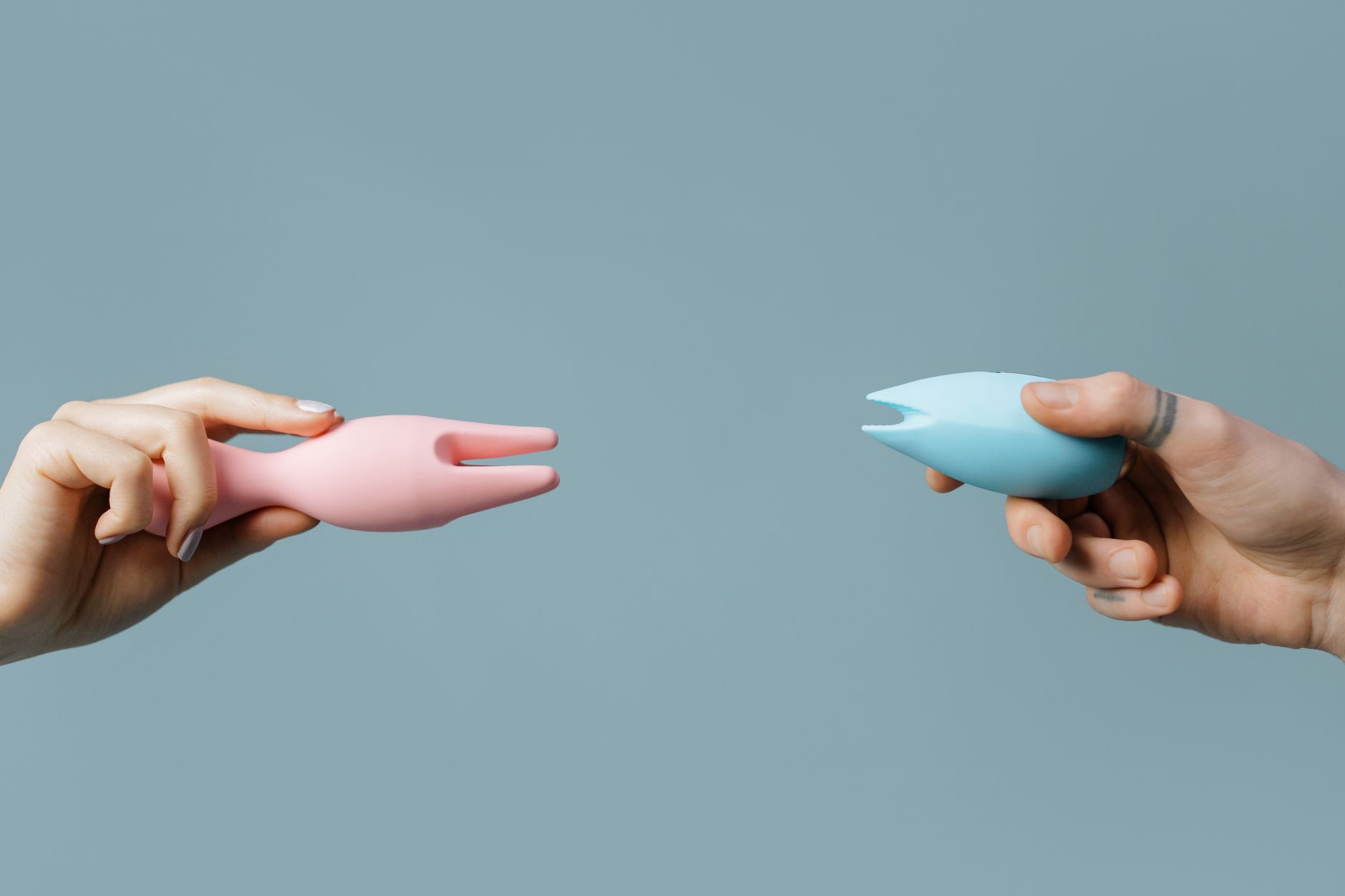
A clitoral vibrator like the Lem does something your partner's hands cannot: it provides consistent, predictable stimulation that you control entirely.
When you introduce a lemon vibrator into partnered sex, you're not replacing your partner's touch. You're creating a third voice in the conversation. Here's what that does for inconsistent sensation.
It removes the guessing. Your partner doesn't have to figure out the right pressure. The Lem delivers what you've already calibrated in solo play. That certainty lets your nervous system relax faster. Your clitoris gets the reliable signal it's been missing.
It buys you mental space. Instead of performing a climax while also monitoring whether your partner is getting bored, you're engaging with an object you understand. That small reduction in cognitive load often opens the door to actual arousal. You're not thinking about whether you're taking too long. You know you're not.
It teaches your partner what responsiveness looks like with you. When they see you actually get there with the Lem, they learn your body's tempo. They start to understand that you're not slow or hard to please. You just need clarity and consistency. Once they see that, many partners naturally start building those qualities into their own touch.
How to introduce it without it feeling like rejection
This is the conversation most couples stumble on.
Don't frame it as "I need this because you're not doing it right." Do frame it as "I want you to see what my actual pleasure looks like." There's a massive difference.
Try something like: "I've noticed my body responds really well to a specific pattern. I'd love to show you what that feels like by using the Lem while you're with me. Then you'll actually know what to aim for."
That's collaborative. That's honest. And it shifts the vibrator from being a solution to your partner's inadequacy into being a tool for shared understanding.
Here's what often happens next: after a few sessions of watching you come clearly and consistently with the Lem, your partner gets curious. They start paying attention to the exact angle, the timing, the rhythm. And over time, your nervous system starts to recognize them as the person who knows this language. Sensation consolidates. Trust deepens. The Lem becomes less necessary because your partner has become fluent.
But it takes time. And in the meantime, you deserve consistent pleasure.
The timing question
Many people ask: when in the relationship should I introduce this?
There's no universal answer, but here's what I've observed. Introducing a lemon vibrator very early (first few encounters) can sometimes feel like you're fast-tracking to a solution for a problem that hasn't actually been established yet. Your partner might wonder whether you're just not that into them.
Introducing it after months of trying and struggling can feel like "I've given up on you." That's harder emotionally.
The sweet spot is usually when you've had enough contact to build basic comfort, but early enough that your partner hasn't yet internalized a story about your pleasure being complicated. Somewhere in the first few months. You say something like: "I really enjoy coming this way, and I'd love to share that with you."
That's not rejection. That's intimacy.
What to watch for
Sometimes introducing a vibrator into partnered sex reveals something deeper. If your partner responds with reluctance, resentment, or competition ("You don't need that with me"), that's worth examining. A secure partner usually finds it hot. They like seeing you get there. They like being part of it.
If your clitoral sensation remains completely inconsistent even with the Lem present, that might point to anxiety or trust issues that aren't about the mechanics of touch. That's worth exploring, maybe with a therapist. A lemon vibrator is not a substitute for addressing attachment wounds.
If sensation is actually changing across partners but staying consistent within a relationship, that's completely normal. Your body is learning that person. Your clitoris is integrating their particular signature into your pleasure map. Time and familiarity usually solve this.
The bigger picture
Inconsistent sensation across partners is one of those things that feels deeply personal and isolating until you realize it's actually just how nervous systems work. You're not broken. You're not too picky. Your clitoris isn't fading. Your body is just asking for consistency, safety, and permission to actually feel.
A lemon vibrator gives you all three of those things immediately. Your partner can learn to eventually provide them too. And in the time it takes for that learning to happen, you deserve to experience your own full pleasure, without apology or explanation.
People also ask
How long does it usually take for sensation to normalize with a new partner?
It varies widely, but most people report that clitoral response feels more predictable and integrated within three to six months of regular sexual contact. Some experience it within weeks if there's already strong emotional safety. Others need longer if there's been trauma or if the relationship is moving quickly in ways that feel destabilizing. The timeline isn't about your body being slow. It's about your nervous system deciding it's safe to allocate resources to pleasure.
Can using a vibrator with a partner actually make sensation more responsive?
Yes, frequently. When you experience clear, consistent orgasm with a vibrator, your brain updates its expectation of what's possible. That confidence often carries over into partnered touch. Additionally, when a partner sees you responding strongly, they often relax their own performance anxiety. That mutual relaxation usually improves sensitivity for both of you.
What if my partner feels threatened by a lemon vibrator?
That's worth taking seriously, but not by agreeing to put the vibrator away. Instead, explore what the threat is actually about. Is it about inadequacy? Feeling replaced? Fear of judgment? Those conversations need to happen outside the bedroom, probably with some reflection on what sex means to each of you. A lemon vibrator doesn't diminish partnered sex. But it does require a partner who sees pleasure as collaborative rather than competitive.
Does clitoral sensation really change that much, or is it mostly psychological?
It's both, and the distinction doesn't actually matter. Your nervous system is part of your body. Psychological safety literally changes blood flow and nerve function. Physiological sensitivity is influenced by what you expect and what you're thinking about. The mind and clitoris aren't separate systems having separate conversations. They're one integrated system. When sensation feels different, it's because something physical or psychological or both has shifted.
Can I use a lemon vibrator if I've never had one before?
Absolutely. The Lem is designed for clitoral pleasure, and you don't need previous vibrator experience to benefit from it. Start with the lower intensity settings and get familiar with how it feels solo before bringing it into partnered time. That way you know your own preferences and can communicate them clearly. Many people find that even a single solo session with the Lem teaches them something new about their own responsiveness.
What if sensation stays inconsistent even after trying everything?
That's a signal to look deeper. Persistent inconsistency can point to anxiety disorders, trauma history, hormonal issues, or relationship dynamics that need professional attention. A sex therapist or couples counselor can help untangle what's physical versus what's psychological. You deserve to feel consistently pleasured. Sometimes the path to that is through a conversation with a professional, not just a better vibrator.
The bottom line
Your clitoris isn't malfunctioning when sensation changes between partners. It's responding to real differences in touch, trust, and neurological state. That's actually how it's supposed to work. A lemon vibrator like the Lem gives you a reliable baseline of your own pleasure. From there, you and your partner can build something together. Your sensitivity will likely deepen over time. And in the meantime, you don't have to wait around wondering if you'll ever feel what you felt before. You'll feel something new. Often, something better.