
The gap that nobody talks about
Let's be real: you can touch yourself and orgasm reliably. Fast, even. But the moment a partner is in the room, your clitoris goes silent. It's not that you don't want pleasure with them. It's not that you don't love them. Something just switches off, and you're left feeling broken, or worse, like you're performing a version of yourself that doesn't actually exist.
This is wildly common. And it has nothing to do with your body's capacity and everything to do with attention, safety, and habit.
Why solo pleasure works so differently
When you're alone, your brain is fully yours. You know exactly what pattern, speed, and pressure your body likes. You're not monitoring your partner's reaction, not worried about how you look, not calculating whether you're taking too long. You're not trying to time it to their rhythm or checking in on their comfort. The feedback loop is simple: sensation goes in, pleasure builds, orgasm happens.
With a partner present, your nervous system is doing three jobs at once. Part of you is tracking your own pleasure. Part of you is tracking them. Part of you is managing the story you're telling yourself about what this moment means. That's cognitive load, and it's not imaginary. Brain imaging shows that when we're being watched or observed during intimate acts, the regions responsible for self-consciousness light up more intensely.
Add in the fact that most of us grew up with zero permission to be openly sexual, and you've got a recipe for what therapists call "spectator mode." You're watching yourself from outside your body instead of being fully inside it.
The role of pressure and expectation
Here's the thing: when you're alone, there's no failure. If you don't orgasm today, it's fine. Tomorrow you'll try again. Your pleasure is for you, and you alone get to decide what success looks like. It might be an orgasm. It might be five minutes of really nice sensation. It might be the feeling of your own touch.
With a partner, the stakes feel higher. Consciously or not, you've internalized the message that orgasm is the goal, that it's what "counts," and that if you don't reach it, you've let them down or disappointed them or failed at being a good partner. That pressure is an orgasm killer. Full stop.
Adding a lemon clitoral vibrator into partnered sex can actually lower that pressure because it changes the conversation from "Can I make you orgasm?" to "What tools help you feel pleasure?" The vibrator becomes the thing doing the work, not your partner's body or your own white-knuckle effort. It's weirdly liberating.
How arousal maps differently in partnership
When you're alone, your arousal builds in a single line. You start at baseline. You get stimulated. Your arousal climbs steadily. You orgasm. Done. It's predictable because you've done it hundreds of times.
With a partner, arousal is messier. You might be physically aroused but mentally distracted. You might be emotionally connected but not physically turned on yet. You might have just come back from worrying about work, or you might be hyperaware of a noise outside. Your partner's arousal doesn't sync with yours. Their pressure might be too light just as yours is ramping up. By the time you've communicated what you need, the moment has shifted.
A lemon vibrator gives you a consistent, predictable source of stimulation that doesn't depend on your partner's timing or pressure. It lets you build your own arousal curve while also being with them. You're not asking them to guess. You're not waiting for the perfect rhythm. You're in control of your pleasure while being intimate with them.
The mind-body disconnect that nobody names
One of the biggest reasons solo orgasm works and partnered orgasm doesn't is that your body has learned where it's safe to let go. When you're alone, your nervous system knows it's protected. When a partner is there, even a partner you trust and love, your body is doing threat assessment. Is this person safe? Are they judging me? What if I look stupid? What if I take too long? What if I'm too loud?
These aren't rational thoughts necessarily, but they're running in the background. They're subcortical. They don't require your conscious agreement to slow down your arousal.
Building a practice with a lemon clitoral vibrator in front of a partner is actually a way to gradually teach your nervous system that pleasure in partnership is also safe. You start by using it solo until it feels totally normal. Then you use it with a partner nearby but not touching you. Then you involve them gradually. Your nervous system gets the data that this is okay. That you can have pleasure and be watched. That your partner can be present for your orgasm without it being a performance.
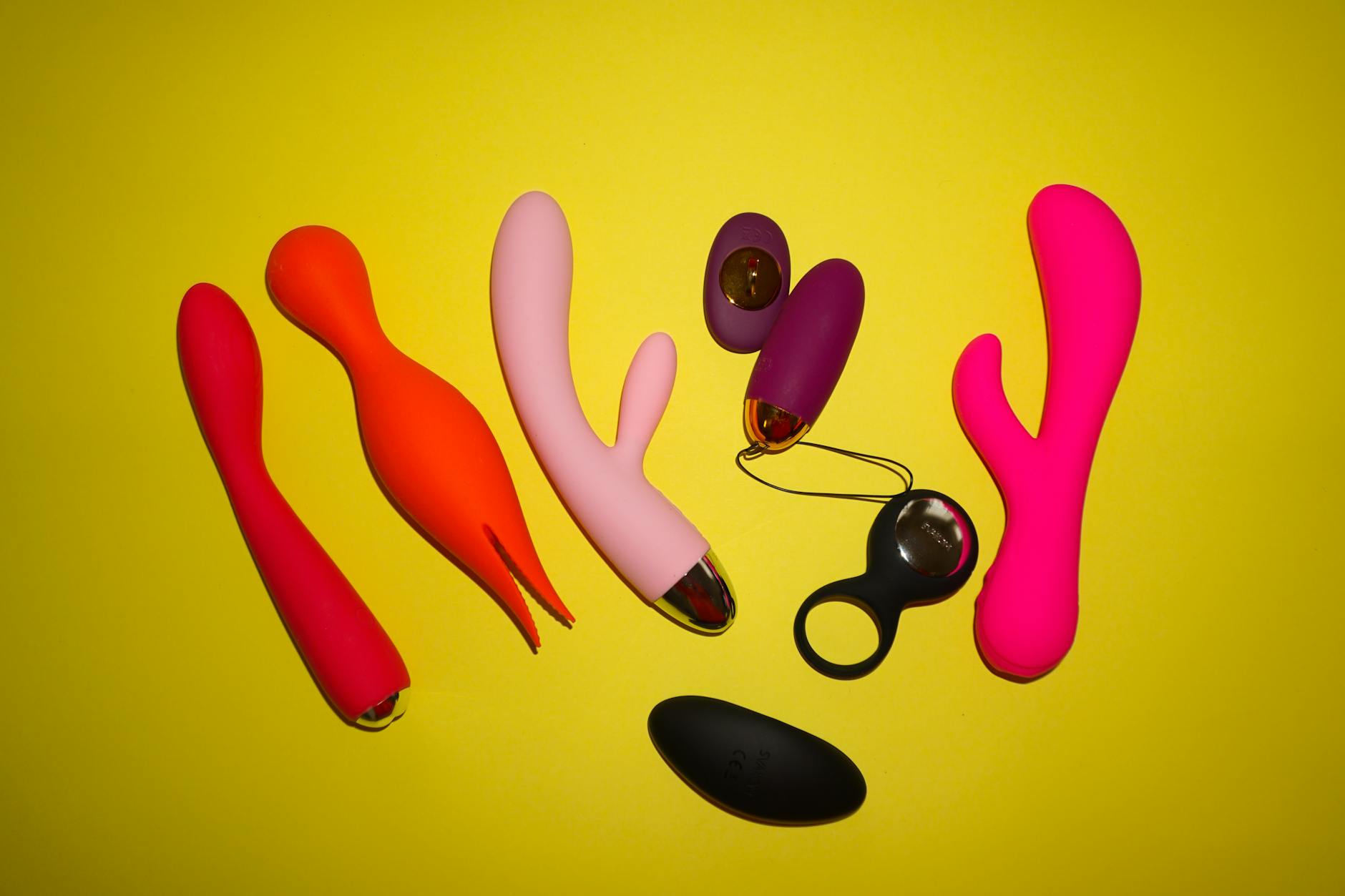
Photo by FounderTips on Pexels
Getting started with a lemon vibrator in partnered sex
Start by establishing your baseline. Use your lemon clitoral vibrator completely solo until you know exactly what speed, pattern, and pressure gets you to orgasm most reliably. This isn't about performing. This is about gathering data about your own body. Write down what you notice: Does pattern 2 feel better than pattern 1? Does it take longer to orgasm if you warm up for less time? Does the suction setting matter more than the vibration?
Once you know your map, you have a foundation to work from. You can say to your partner: "I'm reliably able to come on this pattern. It takes about eight minutes. I like steady pressure." Now you're not mysterious. You're informative. Your partner gets to be helpful instead of guessing.
Then try using your lemon vibrator with your partner in the room but not involved. You're masturbating, they're watching or nearby. This teaches your nervous system that pleasure and their presence aren't mutually exclusive. Take your time. Go slow. Don't rush toward orgasm just to prove it can happen. The point is to desensitize yourself to being watched.
Once that feels normal, involve them. Maybe they use the vibrator on you while you guide them on pressure and speed. Maybe you use it yourself while they kiss you or touch other parts of your body. The vibrator is your reliable source of clitoral stimulation, and your partner is providing everything else.
Why this matters for your relationship
Honestly, the ability to orgasm with a partner isn't just about physical pleasure. It's about vulnerability. It's about trusting someone enough to let go while they're watching. It's about being fully yourself in your body around another person.
When you can only orgasm alone, you're splitting yourself. The version of you that has pleasure and the version of you that is in partnership. That split takes energy. It creates subtle resentment. Your partner feels like something's missing, even if they can't name it. You feel like you're faking closeness.
Working toward partnered pleasure, especially with a tool like a lemon clitoral vibrator that takes the pressure off both of you, actually strengthens the relationship. You're saying yes to pleasure. You're saying yes to being seen. You're saying yes to your partner being part of your most vulnerable moments.
What to communicate and when
This is crucial: don't wait until you're in bed to explain why solo orgasm works and partnered orgasm doesn't. Have the conversation when you're both clothed, calm, and not about to be intimate. Say something like: "I've noticed it's way easier for me to come when I'm alone. I don't think it's about attraction. I think my nervous system just relaxes differently. I'd love to figure this out together, and I think a lemon vibrator might help both of us feel less pressure."
Then listen to what your partner says. They might feel relieved. They might feel hurt. They might have no idea this has been an issue. All of those reactions are valid. The conversation isn't about blaming. It's about honest information sharing.
If your partner is defensive or makes your pleasure feel like a problem, that's different information. That might mean how to use lemon vibrators when your partner avoids pleasure conversations is the post you need first.
The timeline is longer than you think
If you've been only able to orgasm alone for years or decades, rewiring that pattern takes time. You're not broken. You're not frigid. You're someone whose nervous system learned a very specific condition for safety and pleasure. Unlearning that takes repetition and patience.
Expect three to six months of consistent practice before partnered orgasm starts feeling as reliable as solo orgasm. Some people get there faster. Some take longer. The timeline doesn't matter. Progress does.
Use a lemon clitoral vibrator consistently, involve your partner gradually, and notice the small shifts. Maybe you relax a little faster. Maybe you get to the edge more easily. Maybe you stop thinking about work for longer periods. Those are wins.
FAQ
Why can I orgasm alone but not with a partner?
Your nervous system likely feels safer alone because there's no audience, no performance pressure, and no need to synchronize your arousal with someone else's. With a partner present, your brain is simultaneously tracking their reactions, your own pleasure, and internal stories about what it all means. That divided attention interrupts the focus needed for orgasm. It's neurological, not psychological failure.
Does using a lemon vibrator with a partner make the orgasm feel real?
Yes. An orgasm from a lemon clitoral vibrator is your body's actual physiological response. The suction and stimulation patterns trigger the same nerve pathways as any other stimulation. Your orgasm is entirely real. How you reach it doesn't matter.
What if my partner feels threatened by the vibrator?
This is common, especially if your partner has internalized the message that they should be able to do everything for you. Have a conversation about what the vibrator actually is: a tool that helps you relax enough to be vulnerable with them. It's not a replacement. It's an enabler. If that conversation doesn't land and your partner remains threatened, how to use lemon vibrators when your partner wants to watch covers navigation when power dynamics are tricky.
How do I know which lemon vibrator to start with?
Start with the Lem, the classic lemon clitoral vibrator from Helo Nancy Lemons. It has multiple patterns and intensity levels, so you can experiment with what your body responds to. The suction setting is particularly effective for people who struggle to orgasm with penetrative stimulation because it provides consistent, predictable pressure without friction.
Should I teach my partner how to use the vibrator on me?
Eventually, yes. But start by being fully in control yourself. Use it solo, then use it with them watching, then hand them the control if you want to. You're building trust that your pleasure is safe with them present. Once you've done that foundation work, having them use it on you becomes another form of intimacy instead of another form of performance pressure.
What if I still can't orgasm even with the vibrator?
That might mean something else is at play: relationship tension, unprocessed trauma, medication side effects, or a neurological difference in how your body responds. Those are reasons to talk to a therapist or sex counselor, not reasons to give up on this work. The vibrator alone isn't a magic solution. It's a tool that removes one barrier. Sometimes there are multiple barriers to remove.
Here's what actually changes
You don't become a different person. Your body doesn't suddenly transform. What changes is your nervous system's understanding of safety. You teach it that pleasure with a partner present is survivable. You teach it that vulnerability leads to deeper intimacy. You teach it that your clitoris is allowed to feel good, even when someone is watching.
That's not a small thing. That's the foundation of integrated sexuality. The version of you that can feel pleasure alone and the version of you that can be intimate with a partner finally get to be the same person.
If you're ready to explore this, start solo. Get to know your body and a lemon clitoral vibrator completely. Then bring your partner into the conversation. The rest builds from there. Your pleasure matters. Being seen in your pleasure matters even more.