Here's the thing about clitoral numbness after orgasm
Your clitoris goes numb after you come. Not broken, not permanent. Just temporarily desensitized while your nervous system recalibrates. It's the same reason your hand falls asleep when you rest your head on it for too long. The sensation returns, usually within minutes. But if you want to keep the pleasure going without that dead-weight feeling, you need to understand what's actually happening and how to work with it instead of against it.
Most people think numbness means "stop touching." That's not always true. Sometimes it means "touch differently."
Why clitoral numbness happens after orgasm
Your clitoris has roughly 8,000 nerve endings concentrated in a space smaller than a pea. During orgasm, all of those fire at once. Intensely. When that happens, the nerves in the area temporarily stop transmitting sensation as clearly. It's called neural desensitization, and it's a protective mechanism. Your body is essentially saying: "We just sent a massive signal. Let's cool down for a second so we can do it again."
The refractory period (that gap between when you come and when you can feel pleasure again at the same intensity) varies wildly. Some people recover in 30 seconds. Others take 10 minutes or longer. Age, stress, hormones, hydration, and what medication you're taking all shift the timeline.
Here's what's important: during that numbness window, stimulation often feels uncomfortable, too intense, or just... nothing. Touching feels like you're touching someone else's leg. Your brain registers the contact but there's no sensation behind it.
The difference between "numbness" and "I'm done"
Listen to your body. Numbness and "I want to stop now" are two completely different signals. One is physiological. The other is preference.
If you feel numb but you're genuinely interested in more pleasure, lemon vibrators can help bridge that gap. If you feel numb and you're satisfied, honor that. The goal isn't to push through your body's signals. It's to understand them and respond wisely.
The reason many people with vulvas struggle with this: nobody teaches you that post-orgasm numbness is optional to work through. You either keep going (which often feels unpleasant) or you stop. With the right tool and the right technique, you can stay in the pleasure zone without forcing yourself through an uncomfortable stretch.
How lemon vibrators work during the refractory window
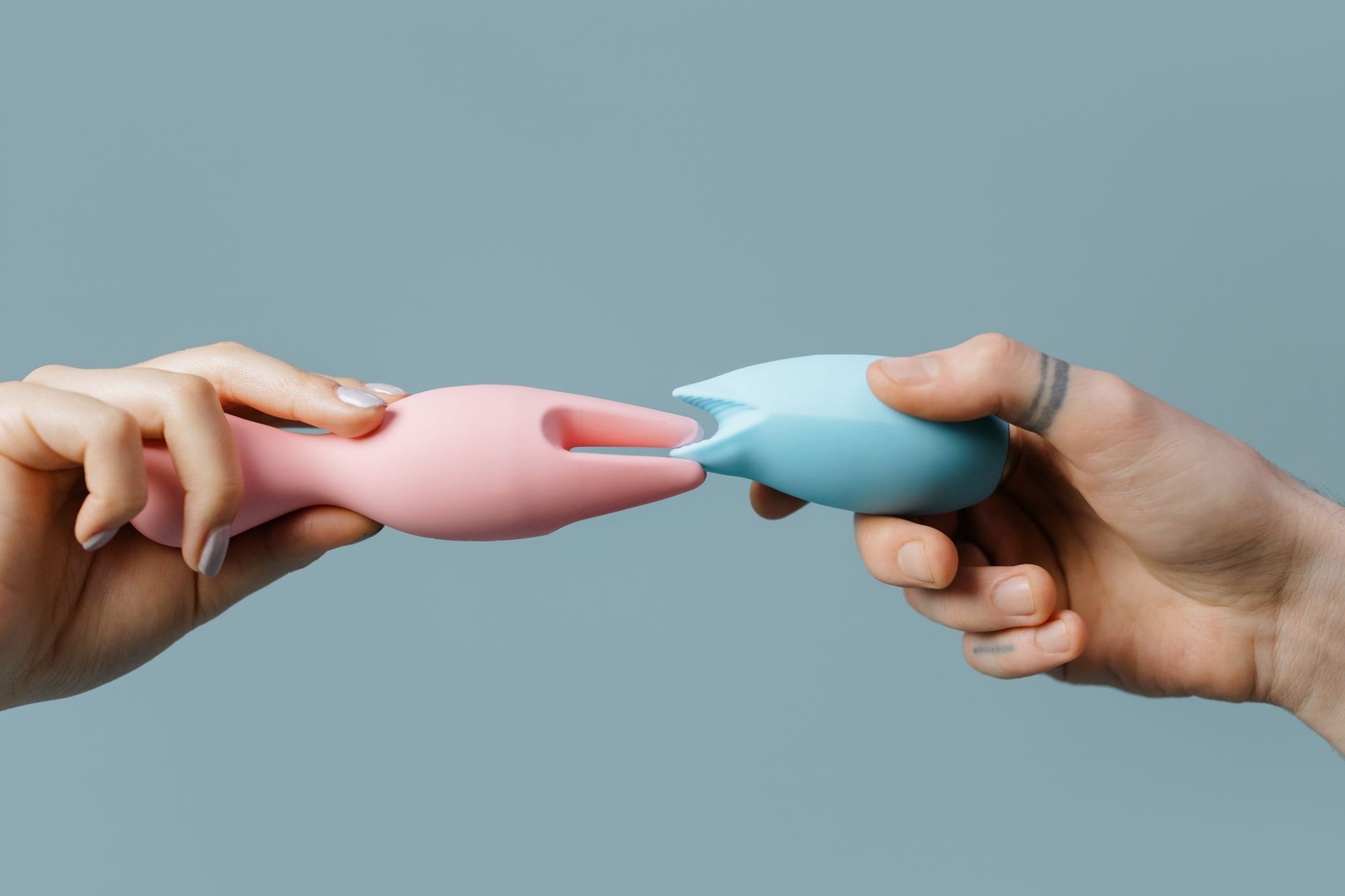
A lemon clitoral vibrator uses gentle suction combined with soft pulsation. That's different from traditional vibration, which is direct stimulation of already-numb nerve endings. Suction creates a rhythmic pressure change rather than constant friction. It engages the tissue differently. You're not hammering numb nerves. You're creating a wave of stimulation that your body can actually feel, even when direct touch feels like nothing.
The Lem vibrator, for example, uses air-pulse technology. It pulls the clitoral tissue gently into a small opening, then releases. Gently pulls, releases. This creates stimulation that works even when direct clitoral touch registers as completely absent. It's one of the reasons people report they can have multiple orgasms more comfortably with air-suction toys than with traditional vibrators.
Start on the lowest setting immediately after your first orgasm. Not because you like low intensity. Because your nervous system needs time to reset. The numbness will fade, and you can increase the pattern strength as sensation returns.
Timing and rhythm matter more than intensity
If you come at 8 p.m. and immediately try another round, you're working against your body's refractory clock. That's frustrating for everyone. Instead, use that break strategically.
After your first orgasm, wait 2-3 minutes. Use that time to slow your breathing, drink some water, touch your partner if you have one. Let your heart rate drop. Then, if you want to continue, switch to something gentler. A lemon vibrator at setting 1 or 2 is ideal for this transitional phase. It keeps you engaged without overwhelming numbed nerves.
Many people find that restarting with a different part of their body helps too. If you've been focused on direct clitoral stimulation, try the inner labia, the outer labia, or the perineum for a few minutes. This gives your clitoral nerves time to reset while maintaining arousal. Then, when you return to direct clitoral stimulation with your lemon clitoral vibrator, sensation feels alive again.
Pacing strategies for extended pleasure
Here are three approaches that work well in practice.
Staggered intensity. Come once at high intensity. Drop to a lemon vibrator at low intensity for 3-5 minutes. Increase intensity gradually as sensation returns. This often results in a second orgasm that feels distinct and satisfying rather than forced.
Pattern switching. If your lemon vibrator has multiple pulse patterns, rotating between them keeps your nervous system engaged without overwhelming it. Your clitoris adapts to the same stimulus and sensation flattens. Different patterns prevent that adaptation.
Positional shifts. Lie on your back for the first orgasm. Roll onto your side for the transition period. Try a different angle or position for the second wave. This changes pressure distribution and often wakes up sensation in areas that feel numb from sustained positioning.
How to know when to push through numbness versus when to stop
Numbness that's starting to fade feels like pins and needles, or a fuzzy, tingling return of sensation. That's your cue that it's time to gently increase intensity. Push here.
Numbness that feels flat, dead, or painful if you do touch it? Stop. That's your body saying the nerves need more recovery time. Come back to it in 5-10 minutes if you want. Or don't. There's no quota.
If you're using a lemon vibrator and sensation still isn't returning after 15 minutes of gentle stimulation, it's time to pivot. Your body might genuinely be done for this session, or it might just need a completely different kind of touch (hands, oral, a partner's touch) to reboot. Pay attention to the pattern. If numbness regularly lasts longer than 10-15 minutes, mention it to a healthcare provider. It's usually nothing concerning, but sometimes medications, stress, or hormonal changes affect recovery time.
Managing frustration during the refractory window
Post-orgasm numbness can feel annoying, especially if you're used to continuous pleasure from other partners or from solo sessions with different toys. You're not broken. You're not slower than other people. Refractory periods are real, they vary widely, and they're nothing to fix.
One mental shift that helps: use the refractory window as a chance to transition. From intense focus to gentle presence. From solo to coupled (if you're with someone). From pleasure-seeking to connection. Some of the most satisfying sessions involve coming once intensely, then moving into a slower, more exploratory phase with a partner. The lemon vibrator becomes a tool for that exploration rather than a way to chase another orgasm immediately.
Practical setup for multiphase sessions
If you're planning a longer session where you expect numbness and recovery cycles, set yourself up for success. Have water nearby. Have a charging cable or extra batteries for your lemon vibrator handy. If you're with a partner, do a brief check-in after your first orgasm. "I'm going to rest for 2 minutes, then we can keep going gently." This prevents awkward pauses and sets shared expectations.
Use lube generously. Even though you're moving to lower intensity, lube reduces friction during the refractory phase and makes the transition more comfortable. Water-based lube works well with silicone toys like the Lem vibrator. It won't degrade your toy, and it feels better against already-sensitive tissue.
Keep the room temperature comfortable. Post-orgasm, your body temperature rises and then drops. Being a bit cool helps with the overall sensation reset. Some people find that a cool breath of air, or literally cool hands from a partner, helps sensation return faster.
When to seek support
If your refractory period is dramatically longer than it used to be, or if numbness feels painful rather than just absent, check in with a healthcare provider. Sometimes changes in recovery time signal something worth addressing. Stress, certain medications, hormonal shifts, and even dehydration can affect how quickly your nervous system resets.
Talk to a healthcare provider if numbness never fully returns, even with extended breaks. That's rare but worth investigating.
And if you've been using one type of toy exclusively and you're experiencing longer numbness, consider that adaptation. Your nervous system gets used to the same stimulus. Switching to a lemon vibrator with a different sensation pattern (suction instead of pure vibration, for example) often resets that adaptation and makes sensation feel sharp again.
FAQ
How long does clitoral numbness typically last?
Most people recover sensation within 2-10 minutes. Some people are back to full sensitivity in 30 seconds. Others genuinely need 15-20 minutes. Refractory time is as individual as pleasure itself. If you're consistently waiting longer than 20 minutes, it's worth exploring why. But anything in the 2-15 minute range is completely normal and nothing to worry about.
Can I use a lemon vibrator during the numb phase, or will it make things worse?
You can, but you have to use it gently. Start on the lowest setting. Many people find that air-suction vibrators like the Lem work better during numbness than traditional vibrators because suction creates a different kind of stimulation than direct vibration. If you try it and it feels unpleasant, stop. That's your body telling you it needs more time before that kind of contact feels good.
Does clitoral numbness mean I'm not getting enough blood flow?
No. Numbness after orgasm is a nervous system response, not a circulation problem. Your clitoris is engorged and sensitive, but the nerves have temporarily stopped sending clear signals. This is completely normal and healthy. If numbness is accompanied by pain, unusual discoloration, or swelling that doesn't go down, that's a different story and worth checking with a doctor.
Will I always have a refractory period, or does it change with age?
Most people with clitorises have some kind of refractory period. The length of it changes with stress, hormones, age, and overall health. Some people find their refractory period gets longer in their 40s and 50s. Others don't notice much change. There's no "normal" and no timeline you should match.
What if numbness feels uncomfortable or painful instead of just absent?
That's a sign to stop. Uncomfortable numbness (pins and needles that hurt, or a painful tingling) means your nervous system needs more recovery time. Switch to a completely different type of stimulation. Touch other erogenous zones. Take a genuine break. Return to clitoral touch in 10-15 minutes if you want to. Pain is not a signal to push through. It's a signal to pause.
Can certain lemon vibrators help me recover sensation faster?
Air-suction vibrators like the Lem vibrator tend to feel good during the refractory window because they engage tissue differently than direct vibration. But the single biggest factor in recovery speed is patience and listening to your body. No toy speeds up your nervous system's reset. What the right toy does is make the waiting period feel pleasant rather than frustrating.
Next steps
Clitoral numbness after orgasm is not a failure. It's your body's natural reset button. Learning to work with it, rather than fighting it or pretending it doesn't exist, opens up new possibilities for extended pleasure without discomfort.
If you're curious about how different lemon clitoral vibrators feel during the refractory phase, or if you want to explore tools designed for that transitional space between orgasms, I'd love to chat. Reach out to our team at /contact with questions about what might work best for your body and your timing. We're here to help you build sessions that feel good at every phase, not just the peak.