The thing nobody tells you about arousal after 40
Let's be real. Arousal used to be faster. You'd think about it, or someone would touch you, and within minutes your body would respond. Now? It's more like a dimmer switch than a light switch. That's not a decline. That's a completely normal shift in how your nervous system works as you age.
Here's what changes: blood flow to the clitoris becomes more gradual. The tissues take longer to engorge. Your brain needs more activation, not less. And the window where you feel aroused can be narrower if you're not paying attention to it. But none of that means you can't have deeply satisfying orgasms. It just means the setup matters more.
Why clitoral vibrators are actually perfect for this phase
This is where air-suction lemon vibrators like the Lem become genuinely smart tools instead of shortcuts. Here's why: they work with slower blood flow, not against it. A vibrator can't force arousal, but it can provide consistent, targeted stimulation that your nervous system responds to even when sensation is more muted. That's not cheating. That's physics.
When arousal is slower to build, you need stimulation that doesn't require you to work harder mentally. The Lem's suction pattern creates a sustained pressure that keeps nerve endings activated without requiring the kind of rapid friction that exhausts smaller muscle groups. You're not racing toward an orgasm. You're creating the conditions where arousal can gather and build.
Most people in their 40s and beyond tell me they need 15 to 30 minutes of buildup now instead of 5. That's not worse. That's actually often better because the pleasure, when it arrives, tends to be deeper and more localized.
Setting up your space for longer arousal
The first thing to shift is your expectation of timeline. You need at least 20 minutes carved out. Not rushed time where you're checking the clock. This sounds simple, but for people used to quickies or fitting sex around other demands, it's a real reset.
Second, temperature matters more now. Your clitoris responds better when you're warm. Take a bath first. Put on layers, close the door, make sure you're not going to get cold. A cooler body temperature actually slows arousal even more, which is why rush and anxiety are enemies here.
Third, use a water-based lubricant from the start. You might not need much at first, but having it there means you're not creating friction on tissues that are more delicate now. The Lem works beautifully with lube, and it lets you focus on sensation instead of discomfort.
The buildup phase: moving slower than you think
Start with the Lem on its lowest setting. Not because you need less intensity later, but because arousal builds in layers. If you start at pattern 3 or 4, you might feel sensation but miss the actual building of arousal, which is where pleasure comes from.
Don't aim for the orgasm yet. Spend the first 5 to 10 minutes just exploring sensation on the outer edges of your clitoris and the vulva around it. Move the device slowly. Let your breathing shift. Pay attention to where warmth is starting to develop in your pelvis.
This phase is actually longer now that you're 40 plus, and that's fine. Arousal works like a bank account. You're making deposits. Early deposits are smaller but they add up. If you try to skip to big withdrawals, you'll find yourself depleted.

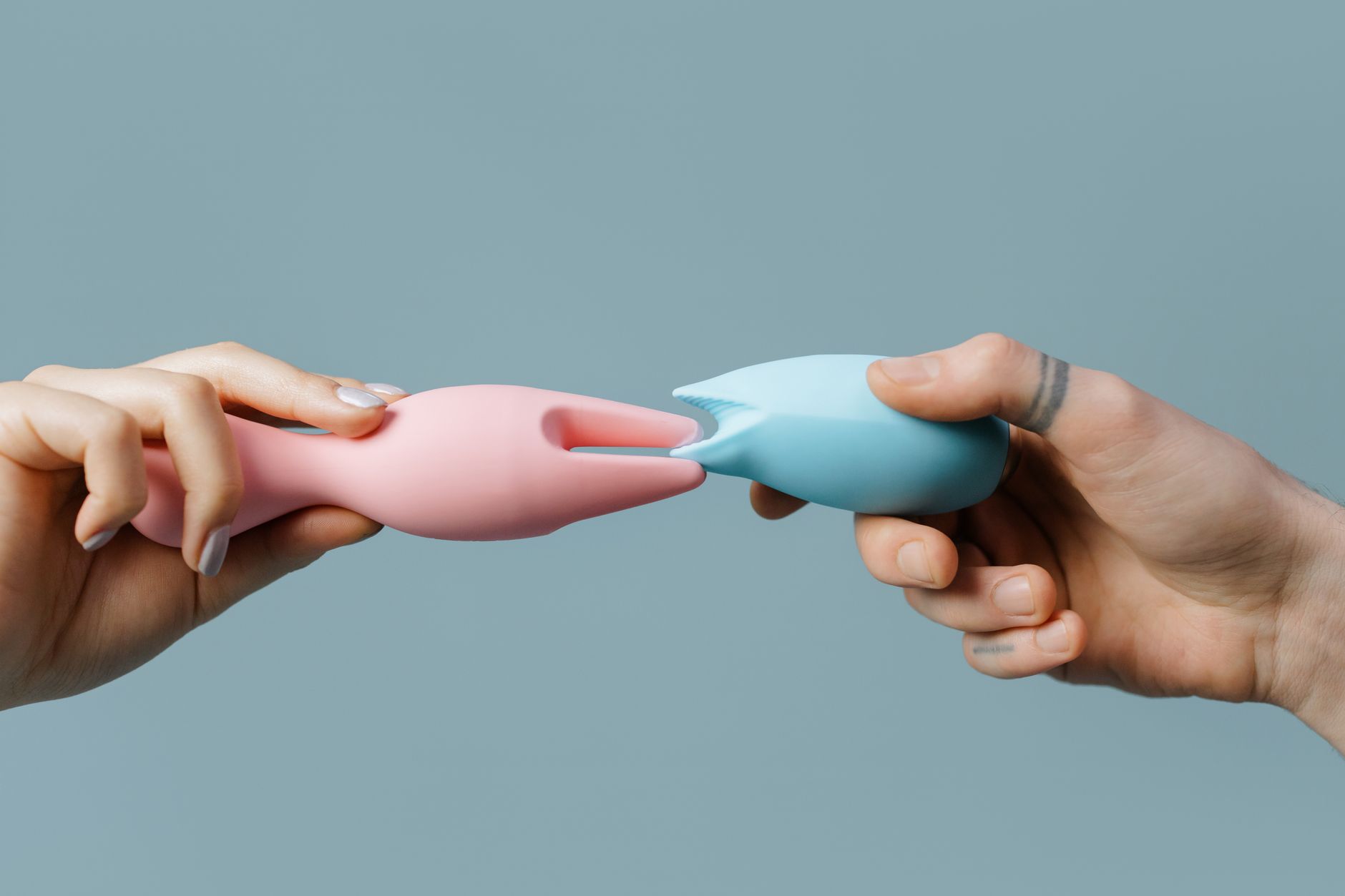
Photo by cottonbro studio on Pexels
Around minute 10 to 12, when your breathing has shifted and you're genuinely engaged, you can start increasing intensity slightly. Move up to pattern 2 or 3. This is where you're matching the rhythm to where your body actually is, not where you think it should be.
Why rhythm matters more than intensity now
One of the biggest mistakes people make after 40 is assuming they need more intensity. Sometimes they do. More often, they need consistency. Your nervous system now prefers a predictable rhythm that it can anticipate and respond to, rather than random variations or constant changes.
Focus on staying at the same pattern for several minutes. Let your body build a response to it. The clitoral nerve has about 8,000 nerve endings, and they work best with sustained, repeatable stimulation. Jumping between patterns every 30 seconds actually works against arousal now.
If you're using the Lem with a partner, this is worth explaining. It's not that you've become less interested in variety. It's that your arousal works best with a steady beat. That's a strength to build on, not a limitation to fight.
The plateau: where arousal stops feeling linear
After about 15 to 20 minutes, you might notice that sensation stops intensifying the way it used to. You're not losing arousal. You're hitting a plateau. This is completely normal and it's actually where the deepest sensations often live.
At this point, some people benefit from switching to a slower pattern at higher intensity. Others prefer staying where they are and focusing on breathing. Some like to incorporate a partner's touch at this phase, or shift position slightly.
The key is not to interpret the plateau as failure. It's the opposite. It means your arousal has stabilized and your body is ready to either build higher from here or to have an orgasm from this baseline. Both are valid.
When to call a specialist
If after 30 minutes of consistent, unhurried stimulation you're still not experiencing any clitoral sensation, that's worth mentioning to a doctor. It could be medication related, hormonal, or sometimes related to circulation. A good GP can help you figure out if something needs addressing.
Similarly, if pain accompanies the longer arousal time, don't push through it. That's different from the normal shift in sensation. A pelvic floor physical therapist can often help with that.
The orgasm phase: letting it happen instead of chasing it
Once you're in that plateau and your body feels engaged, orgasm often arrives more smoothly if you stop trying. This sounds contradictory but it's real. Most of us spend decades holding tension, managing expectations, and monitoring ourselves. After 40, that self-monitoring actually interferes.
Try this: once you feel close, keep the rhythm the same and focus on your breathing instead of the sensation. Let your pelvis respond naturally. The orgasm will often come when you're not directly chasing it.
For some people, orgasms after 40 are more subtle. Less full-body, more concentrated in the clitoris and pelvic floor. That doesn't make them less real or satisfying. Many people actually report that these more focused orgasms feel more intense because the nerve density is higher in a smaller area.
Why longer arousal time is actually an upgrade
Here's what most articles won't tell you: arousal that takes 20 minutes instead of 5 can be deeper. Your brain actually gets more involved. You're not running on automatic. You're present in a way that younger bodies sometimes skip past.
If you're with a partner, this is time for more connection, more foreplay, more talking. If you're solo, it's time to genuinely tune into your own body instead of rushing toward an outcome. That shift in quality matters more than the shift in speed.
Lemon vibrators like the Lem are built for this. They support sustained arousal, they work with slower blood flow, and they let you build pleasure in layers. You're not fighting your body's natural rhythm. You're finally respecting it.
FAQ: Arousal and the Lem after 40
How long is normal for arousal to take after 40?
Anywhere from 15 to 30 minutes is completely standard. Some people take even longer. The key difference from younger years is that it's not about rushing toward a specific moment anymore. It's about settling into a longer window of engagement. This actually often leads to deeper sensation and more satisfying orgasms because your arousal has time to build in layers.
Will a lemon vibrator help if I'm on hormone replacement therapy?
Yes. HRT changes tissue quality and sensation, which can make clitoral stimulation feel different. Some people find they're more sensitive, others less. A clitoral vibrator like the Lem lets you explore that sensitivity at your own pace without pressure. The suction pattern is particularly good for people whose tissue has changed because it doesn't require the same amount of friction as a traditional vibrator. Start low and adjust from there.
Is it normal that I need more mental focus to feel arousal now?
Completely. Younger nervous systems are more reactive. After 40, your arousal often requires more intentional attention. You have to actually be present instead of just responsive. That sounds like a burden but it often leads to better sex because you're mentally engaged. When you're using a device like the Lem, that mental focus is actually part of what makes it work. You're not distracted trying to manage the stimulation. The device does that. You just focus on sensation.
What if my partner thinks longer arousal means something is wrong with our relationship?
This is worth a direct conversation. Arousal changes with age are biological, not relational. Longer arousal time doesn't reflect how attracted you are to them or how much you want them. It's literally how your nervous system has matured. Some couples find that adjusting expectations around timing actually improves intimacy because there's less performance pressure. If you're using a device like the Lem together, frame it as exploring together rather than fixing something broken.
Can I use a lemon clitoral vibrator if I'm on antidepressants that affect arousal?
A clitoral vibrator can sometimes help counteract medication effects on arousal because it provides sustained stimulation that your body can respond to even when sensation is muted. That said, if your antidepressant is significantly dampening arousal, that's worth discussing with your prescriber. Sometimes switching timing, dosage, or medication can help without losing the mental health benefits. The vibrator can be part of the toolkit, but it's not a replacement for that conversation.
Is there a point where arousal gets too slow?
If you're giving yourself 30 minutes of unhurried, consistent stimulation and feeling nothing at all, that warrants a check with a healthcare provider. Medications, circulation issues, or hormonal shifts can sometimes create that kind of numbness. A physical therapist specializing in pelvic health or a doctor who listens to your concerns can help identify if something needs attention. In the meantime, a device like the Lem can help you figure out what level of stimulation actually registers for you, which is useful information to bring to that conversation.
The actual truth about arousal after 40
Your body didn't get worse. It got different. Different isn't decline. Sometimes it's actually an upgrade because you finally have permission to stop rushing. You have better tools, lemon vibrators being one of them. You have more self-knowledge. And you have less patience for mediocre sex because you know yourself well enough to know what you actually want.
The longer timeline isn't something to work around. It's something to work with. When you do, the pleasure tends to surprise you.