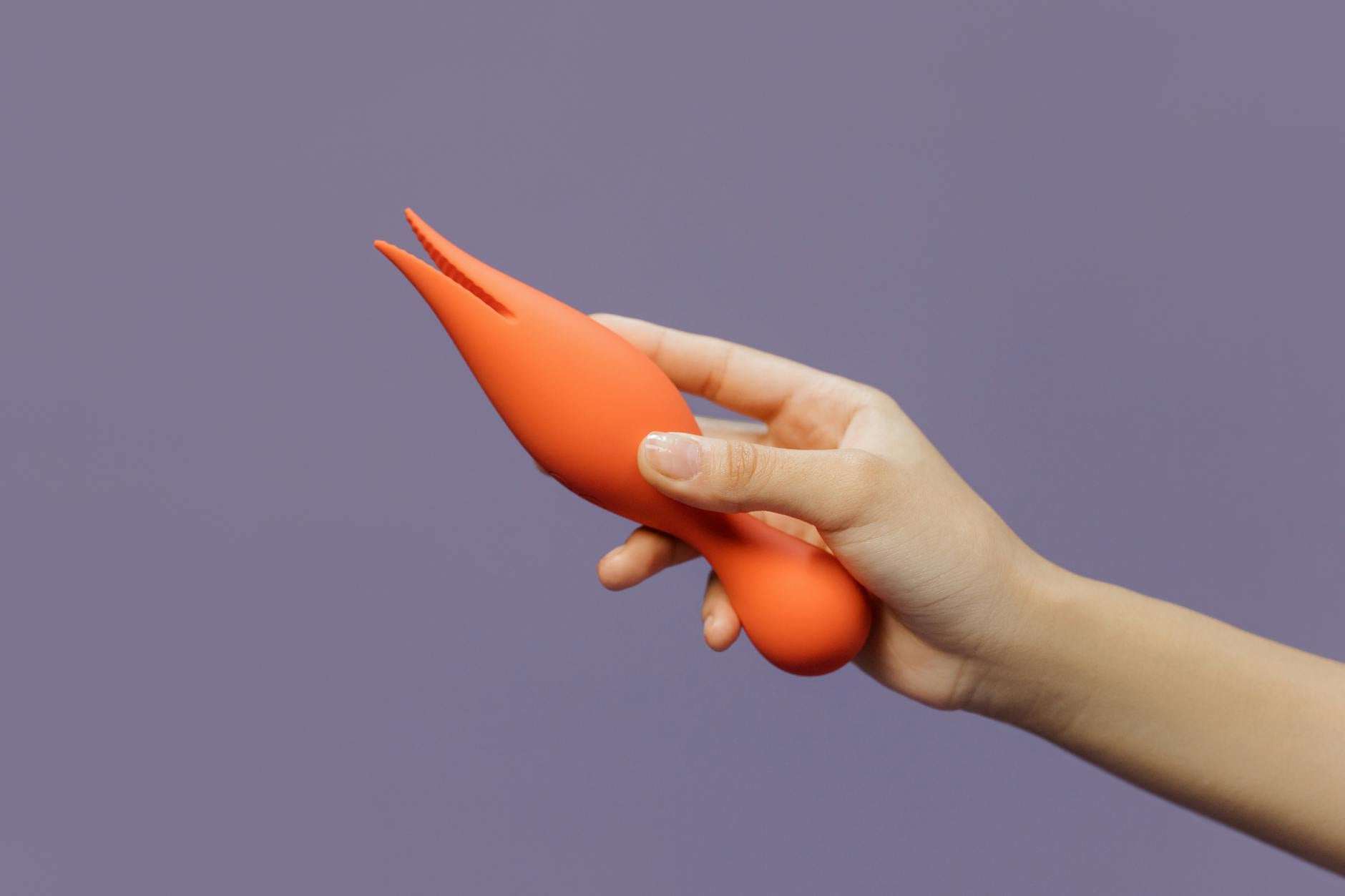
Here's what grief actually does to your body
Grief is not sadness with better marketing. It's a full-body shutdown that rewires how your nervous system processes everything, including pleasure. When you're grieving, the amygdala (your brain's threat detector) goes into overdrive while the prefrontal cortex (the part that handles nuance and enjoyment) dims. Result: arousal feels like a foreign concept. Touch that used to feel good registers as nothing. Or worse, it feels intrusive.
This isn't a sign that something's wrong with you. It's biology doing its job. Grief is a survival state. Your body prioritizes staying alert over feeling good.
But here's what matters: this state doesn't last forever. And reconnecting with pleasure during grief isn't frivolous or disrespectful to loss. It's an act of survival.
Why sensation-based tools matter when everything feels numb
During grief, you need something that meets you where you are: tools that don't require arousal to exist first. Lemon clitoral vibrators are designed exactly this way. They don't wait for desire to build. They generate sensation directly, which can jump-start the neural pathways that have gone quiet.
The suction technology in lemon vibrators works on a different principle than friction-based toys. Instead of requiring existing sensitivity, suction actually stimulates the thousands of nerve endings in and around the clitoris by creating gentle pressure and release. For someone in a grief fog, this rhythmic stimulation can feel like a reminder that your body still exists and can still feel.
This isn't about forcing an orgasm. Early in grief, orgasm might not even be possible, and that's fine. The point is rekindling the signal between your nervous system and pleasure centers that grief has temporarily silenced.
The neuroscience of numbness and why you might feel nothing at first
When cortisol (your stress hormone) stays elevated for weeks or months, it suppresses dopamine and serotonin production. Dopamine is critical for anticipatory pleasure; serotonin helps you feel reward and satisfaction. Both are depleted during acute grief.
On top of this, grief often comes with hypervigilance, which means your nervous system stays in fight-or-flight mode. In this state, your body literally cannot access the parasympathetic nervous system, the "rest and digest" mode where sexual pleasure lives. You might try to feel something and hit a wall. That wall is neurological, not psychological. You're not broken. You're grieving.
Lemon adult toys can be a bridge because they provide external stimulation that doesn't depend on your nervous system being relaxed first. Gentle, consistent suction can gradually signal to your body that it's safe to pay attention to sensation. Over time, with repetition, this can lower your nervous system's baseline threat level and create space for feeling again.
When to start and when to wait
Honestly, this depends on the grief and the person. If you're in the first two weeks after a major loss, pushing yourself to use a lemon vibrator feels counterintuitive and probably won't help. Your nervous system needs actual rest right now.
But if you're several weeks in and you notice small moments where you're starting to exist again between waves of pain, that's a signal. If a friend texts and you laugh, even briefly. If you taste your coffee instead of just drinking it. If you notice the light in a room. These are signs that your nervous system is beginning to regulate.
That's when reconnecting with the lemon vibrator makes sense. Not because you should, but because there might actually be something there to reconnect with.
How to actually start when arousal is nowhere on your radar
Forget everything you've been told about warm-up routines. Grief rewrites the rules.
Start by just holding the lemon vibrator. Not using it. Holding it. Feel the weight, the texture, the shape. This is about reminding your nervous system that sensation exists outside of pain. Do this for a few days if you need to. No rush.
When you're ready, turn it on at the lowest setting. Apply it to your inner thigh first, nowhere near the clitoris. The goal is to acclimate to the feeling without pressure. If that feels okay, move it closer. Spend time at each stage. You might not reach the clitoris for several sessions, and that's perfect.
One key thing: don't have a goal. No orgasm target. No sensation expectation. The goal is just "I'm going to use this for five minutes and notice what happens." Grief hates performance pressure, and your nervous system will shut down harder if you're trying to prove something.
Many people find that the first time they feel something during grief is mild tingling or a dull awareness, not pleasure. That's the reconnection. That's the win. Over weeks, as grief gradually loosens its grip, that dull awareness can deepen.
Pairing the lemon vibrator with grounding when emotions hit
Using a lem vibrator during grief can sometimes unlock emotions you've been storing. You might feel tingling in your clitoris and suddenly start crying. That's your nervous system releasing. It's not a sign to stop. It's a sign it's working.
Have grounding techniques ready. Before you start, put on a song you love. Have a blanket or weighted item nearby. After you finish, splash your face with cold water or hold ice cubes. These are nervous system regulation tools. They help your body move from activation back to calm.
And know this: if you try the lemon vibrator and feel nothing, that's not failure. Grief sometimes requires way more time. If you try and feel too much too fast, that's also okay. You can stop. You can come back when you're ready.
The conversation with your partner, if there is one
If you're partnered and grieving, sex often becomes this elephant in the room. Your partner might be grieving too. They might feel rejected. You might feel pressure to perform desire you don't have.
Using a lemon clitoral vibrator solo during grief is not avoidance. It's actually the opposite. It's you reconnecting with your own pleasure independently, which eventually makes it easier to reconnect with your partner from a place of genuine feeling rather than obligation.
If you want to talk about it: "I'm grieving right now and sex doesn't feel accessible. I'm trying to gently reconnect with my body using something solo. This isn't about you or us." That conversation, awkward as it is, often relieves so much pressure.
When numbness persists and you might need support beyond a vibrator
Here's the thing: grief is normal. Prolonged numbness mixed with inability to feel pleasure for months on end is not. That's depression, and it often comes alongside grief but is a separate condition that needs separate support.
If you've been using a lemon vibrator consistently for two months and feel zero change, or if the numbness extends to everything (food, connection, laughter, not just sex), talk to a therapist or your GP. Grief is not a diagnosis. Grief combined with anhedonia (inability to feel pleasure) sometimes is.
A lem vibrator is a tool for reconnection when your body has temporarily forgotten what feeling good is like. It's not a treatment for depression. The two can coexist, and both are treatable.
FAQ
Can using a lemon vibrator during grief make the numbness worse?
Unlikely if you're patient with yourself. Grief's numbness is protective. Gentle external stimulation like suction doesn't force feeling; it just offers an invitation. Your nervous system will either accept it or ignore it. If you're pushing too hard or expecting too much too fast, that pressure can trigger shutdown. The key is experimenting without agenda.
How long does it usually take to feel sensation again after grief starts to lift?
It varies wildly. Some people feel minor tingling within a week or two of trying a lemon vibrator once their acute grief begins to soften. Others take months. Grief doesn't follow a timeline. Your body will reconnect with pleasure on its own schedule. The lemon suction technology just helps lower the barrier a bit.
Is it okay to use a lemon vibrator if I'm on antidepressants that affect sensation?
Yes. In fact, antidepressants during grief are often necessary and helpful. They stabilize your mood while your nervous system heals. Some antidepressants do dampen sensation initially, but that's temporary. Using a lemon vibrator while on medication is fine. You might need higher settings or longer sessions, but the principle remains the same.
Should I tell my therapist I'm using a lemon vibrator to reconnect during grief?
If you have a good therapist, absolutely. They're trained to understand that reconnecting with your body after loss or trauma is part of healing. They won't judge. They might even suggest it. If your therapist seems uncomfortable, that's useful information about whether they're the right fit for you.
What if I use the lemon vibrator and feel more sad instead of pleasure?
That's actually common early on. Sensation can unlock emotion. If sadness comes up, let it. You're not doing something wrong. Your nervous system is processing. Stay with it for a few minutes if you can. Afterward, ground yourself. Cold water on your face. A blanket. A name five things you can see. Then rest.
Can a partner use a lemon vibrator on me while I'm grieving, or is solo use better?
Solo is often easier first. When you're grieving, shared sexual touch can feel complicated because it carries expectation and potential for disappointment. Solo reconnection with the lemon vibrator lets you move at your own pace without worrying about anyone else's experience. Once you've felt sensation return solo, shared touch becomes possible again naturally.
The reconnection is slower, not impossible
Grief rewires your nervous system temporarily. It's not a permanent state. Reconnecting with pleasure using tools like lemon clitoral vibrators is one of many ways your body can begin signaling that it's starting to live again. There's no rush. There's no right timeline.
If you're grieving and want to explore this more, reach out. We're here to support the messier, slower parts of reconnection. Your pleasure matters, even when grief makes it hard to feel. If you have specific questions about your situation, we'd love to talk. Contact us anytime.